Nasal valve collapse surgery: when rhinoplasty also addresses breathing
Nasal valve collapse surgery, usually called nasal valve repair, treats narrowing or collapse in part of the nasal airway. It can be performed alone or alongside other nasal surgery, but a clinician needs to assess whether the valve is causing your breathing problem.
If you're considering rhinoplasty in Thailand and have a breathing concern, ask the operating surgeon whether the valve needs assessment. If breathing has changed after an earlier operation, describe that change and when it began.
Clinics cannot pay to be listed or ranked higher on AsiaPatient.
What nasal valve collapse is
The AAO-HNS position statement describes nasal valve dysfunction as narrowing or collapse that causes symptoms of nasal airway obstruction. It distinguishes the external and internal nasal valves, at the nostrils and farther inside the nose, respectively.
The external valve is bounded by the lower septum and structures around the nostril, including cartilage and soft tissue. The internal valve is bounded by the septum, the front of the inferior turbinate, a structure inside the nose, and upper lateral cartilage, according to AAO-HNS.
The septum is the internal dividing wall, as ENT Health explains. Ask the clinician to point out the valve boundaries on a diagram, including the inferior turbinate inside the nose.
AAO-HNS separates dysfunction into static and dynamic forms. Static narrowing is present at rest; dynamic dysfunction occurs when you breathe in.
Ask which area the clinician thinks contributes to your obstruction and whether the problem is present at rest or during inhalation. Leave the diagnosis to that examination.
How a clinician assesses whether the valve is part of the problem
History and physical examination come first
AAO-HNS calls symptomatic nasal valve dysfunction a clinical diagnosis, made from the patient's history and a physical examination. The consultation therefore needs your description of the breathing problem as well as the clinician's findings.
Before the appointment, write down when the blockage began and how it affects daily life. Include any previous nasal operation and explain whether the concern existed before it or appeared afterward.
Ask the clinician to explain the finding in plain language. Which part of the airway is involved, and what did the examination show about the valve's contribution?
What scans, endoscopy and the Cottle maneuver can and can't show
A computed tomography (CT) scan doesn't measure dynamic collapse and isn't accurate for characterizing the nasal valve, according to AAO-HNS. Nasal endoscopy, an examination inside the nose, can help identify additional causes of obstruction.
The same position statement says that subjective improvement in breathing during a Cottle or modified Cottle maneuver, an examination maneuver, confirms nasal valve collapse. Discuss this with the clinician rather than using a home test to decide whether you need surgery.
If a scan or endoscopy is proposed, ask what the clinician wants to assess with it. Ask how its findings will be considered alongside the physical examination.
Nasal valve repair, septoplasty and rhinoplasty aren't interchangeable
Functional rhinoplasty means nasal surgery intended to improve breathing. AAO-HNS recognizes valve repair as a distinct procedure that can improve obstruction symptoms in appropriately selected patients with valve collapse.
Repair may help selected patients. Ask which examination findings support repair in your case.
ENT Health describes septoplasty as correcting a deviated septum when it causes significant obstruction. Cosmetic rhinoplasty concerns the nose's shape and facial balance.
AAO-HNS says valve repair can be performed alone or with other procedures for nasal obstruction. Septoplasty or turbinate reduction, surgery to reduce the inferior turbinate, may complement it, but they aren't substitutes for treating valve dysfunction.
For the combined septum and shape decision, see septorhinoplasty.
Ask the surgeon whether any proposed valve repair is a separate part of your plan.
If your consultation concerns appearance as well as breathing, ask which planned changes address each concern. Don't assume a cosmetic rhinoplasty plan includes valve repair.
Repair approaches a surgeon may discuss
Structural support and spreader grafts
A spreader graft uses cartilage to reconstruct and support the middle part of the nose. The 2022 review Spreader Graft vs Spreader Flap in Rhinoplasty discusses it in the context of reconstruction of the nasal mid-vault, meaning the middle part of the nose.
That review compared graft and flap techniques for internal valve angle, nasal obstruction symptom scores and anterior rhinomanometry.
Ask whether the proposed graft addresses the area identified during your examination. If the surgeon discusses a spreader flap instead, ask why that approach fits your anatomy and what trade-offs apply.
Other ways to stabilize the valve
AAO-HNS lists cartilage grafting and open surgical repair among the possible treatments. It also names suture suspension, implants and radiofrequency treatment aimed at stabilizing the valve.
If another method, such as suture suspension, an implant or radiofrequency treatment, is proposed, ask the surgeon to explain what it involves. What is its intended role in your plan?
Ask why the surgeon proposes that method for the particular area involved. What alternatives were considered, and what limitations should you understand before deciding?
What non-surgical measures can and can't do
AAO-HNS says conservative treatment may include nasal cones or external adhesive dilator strips. These are aids used inside the nose or across its outside, respectively.
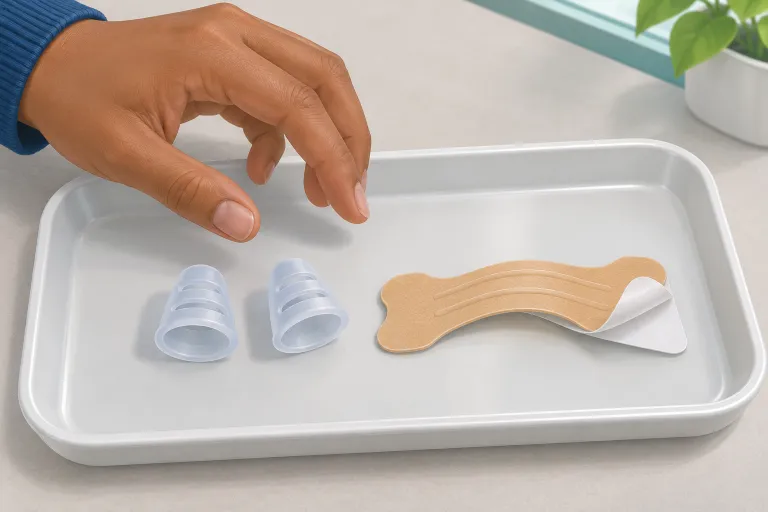
AAO-HNS says they aren't practical for continuous use and doesn't regard them as viable long-term treatment for nasal valve dysfunction. Ask the clinician whether either aid has a role for you and how to use it.
Steroid sprays have a different stated role. AAO-HNS says intranasal steroids may address enlargement of the inferior turbinate, but don't address most anatomical components of the valve.
Ask what a prescribed spray is intended to treat. If you already use one, discuss its purpose and your symptoms with the prescribing clinician before changing treatment.
Before deciding on functional rhinoplasty, make sure you know what each proposed treatment is intended to address:
| Topic | Source's distinction | Question for the surgeon |
|---|---|---|
| Nasal valve dysfunction | Narrowing or collapse can cause obstruction; diagnosis is clinical. AAO-HNS | Which valve area contributes to my symptoms? |
| Valve repair | It can be standalone or combined with other obstruction surgery. AAO-HNS | Is valve repair part of my proposed operation? |
| Septoplasty or turbinate reduction | These may complement valve repair but aren't substitutes for it. AAO-HNS | What will each proposed procedure address? |
| Strips, cones and sprays | Strips and cones have conservative roles; steroids may address turbinate enlargement. AAO-HNS | What is each treatment intended to do for me? |
What the evidence can support, and what it can't
The 2010 Clinical Consensus Statement: Diagnosis and Management of Nasal Valve Compromise gave the evidence on surgical management an overall grade C. It explains that this grade reflected evidence made up almost entirely of uncontrolled case series, reports of treated patients without a comparison group. The statement notes that the grade describes the study design, not the results of the studies.
AAO-HNS's position statement says repair can improve obstruction symptoms for appropriately selected patients.
Ask the operating surgeon what benefit they expect for your specific obstruction and which symptoms may remain. Request the reasoning for the chosen approach, including its limitations and alternatives.
Before agreeing to an operation, ask for the recovery instructions and follow-up schedule for that plan. Ask which symptoms should prompt contact and who will assess any concern after surgery.
Frequently asked questions
What is nasal valve collapse?
AAO-HNS describes valve dysfunction as narrowing or collapse of the external or internal nasal valve that causes airway obstruction symptoms. Static dysfunction is present at rest, while dynamic dysfunction occurs during inhalation.
How is nasal valve dysfunction assessed?
Diagnosis uses your history and a physical examination, according to AAO-HNS. Its statement says CT scans don't measure dynamic collapse; ask the clinician how the examination findings explain your symptoms.
Is nasal valve repair the same as septoplasty?
No. AAO-HNS treats valve repair as a distinct procedure and says septoplasty may complement it but isn't a substitute for treating valve dysfunction.
Can nasal valve repair be combined with rhinoplasty?
Valve repair can accompany other nasal surgery for obstruction, according to AAO-HNS. If you're also seeking a shape change, ask the surgeon whether the proposed operation includes valve repair and what each part is intended to address.
What repair procedures might a surgeon discuss?
AAO-HNS names cartilage grafting, open repair, suture suspension, implants and radiofrequency treatment. Ask the operating surgeon which approach fits the clinical findings and why.
Can nasal strips, cones or steroid sprays fix a nasal valve problem?
AAO-HNS lists strips and cones as conservative options, but doesn't regard them as viable long-term treatment. It says steroid sprays may address inferior turbinate enlargement, while leaving most valve anatomy unaddressed.
Ask the clinician what each proposed treatment is intended to address before deciding on a plan.
Read next
- Are rhinoplasty results permanent? What changes over timeHow long rhinoplasty results last, when the final shape shows, what can change over the years, implant and cartilage differences and when revision is considered.
- Rhinoplasty Cost in Thailand: Hospital Price Lists (2026)Rhinoplasty in Thailand from the hospitals' own price pages: Yanhee, Bangkok Hospital, PPSI, Rattinan, what each row includes, agency add-ons, trip budget.
- Rhinoplasty in BangkokWhich Bangkok hospitals and clinics print a nose surgery price, where they are and how to check the surgeon.
- Rhinoplasty clinics in Thailand comparedThe Thai hospitals and clinics that do nose surgery, compared on printed prices, accreditation and named surgeons.
Ask a Surgeon Whether the Valve Is Part of Your Plan
Tell us the procedure, your budget and your dates, and any hospitals you are considering.
Get My Free Quote →Free, no obligation. Nothing goes to a clinic without your OK.