Hair Transplant Before and After: Bangkok Results Guide
Searching for hair transplant Bangkok before and after photos is one of the smartest things you can do before booking a procedure. But photos alone don't tell the full story. Lighting, angles, camera distance, and even hair styling can make results look dramatically better - or worse - than reality.
This guide goes beyond the gallery. We break down what hair transplant results in Bangkok actually look like at every stage, what's realistic for your level of hair loss, and how to tell genuine transformations from misleading marketing.
Whether you're considering FUE, DHI, or still deciding - understanding the timeline and realistic outcomes will save you from disappointment and help you choose the right clinic.
-
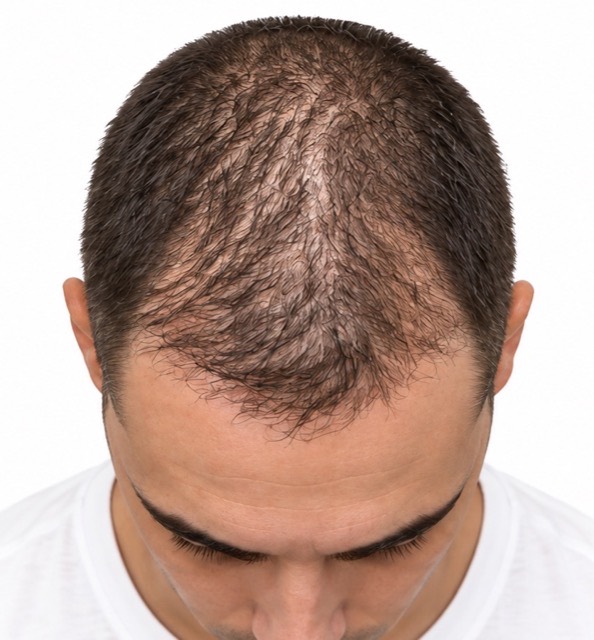 Overhead light, hair flat
Looks thinner
Overhead light, hair flat
Looks thinner
-
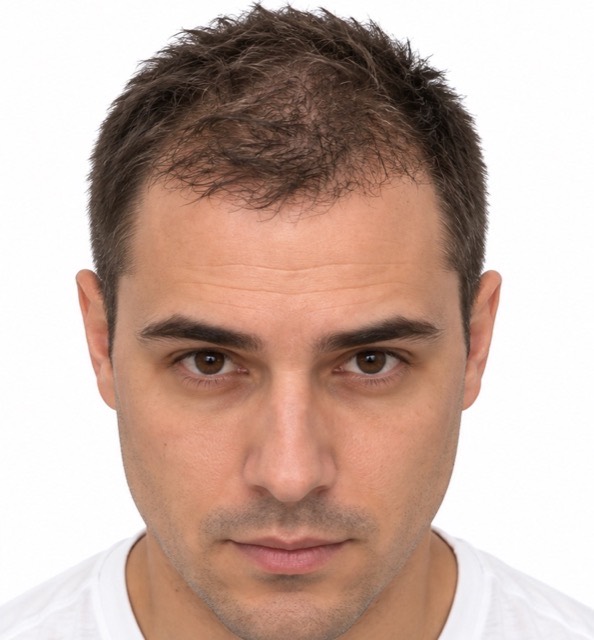 Eye level, hair styled
Looks fuller
Eye level, hair styled
Looks fuller
Hair Transplant Results Timeline: What to Expect Month by Month
Hair transplant results don't happen overnight. The full cycle from procedure to final outcome takes 12-18 months, and the journey includes phases that can catch first-timers off guard.
-
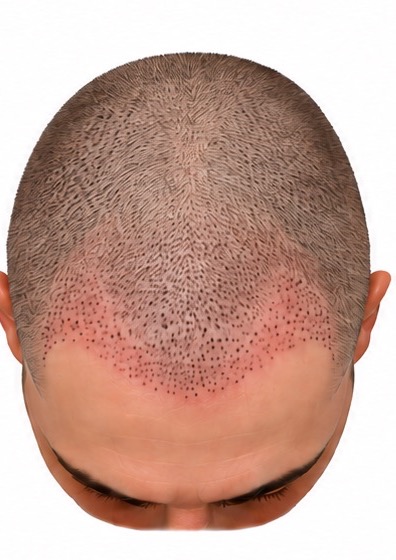 Week 1
Grafts placed
Week 1
Grafts placed
-
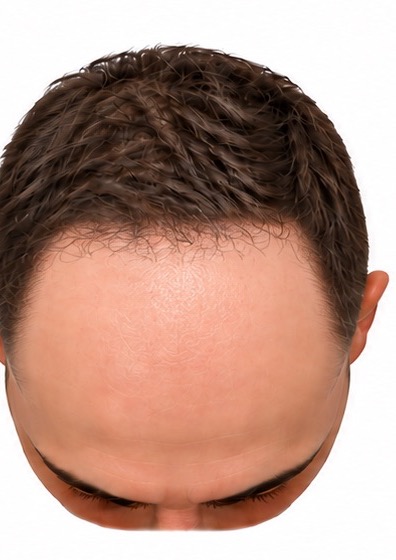 Month 1
Transplanted hair sheds
Month 1
Transplanted hair sheds
-
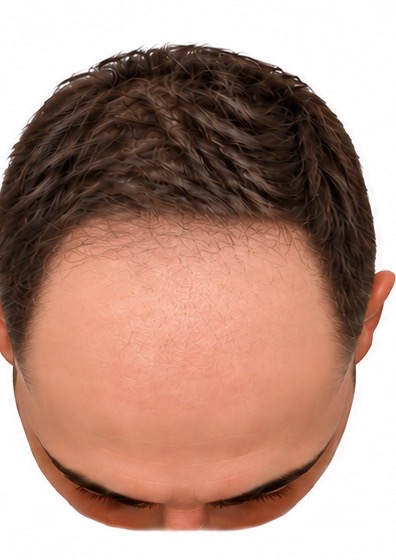 Month 3
Little visible change
Month 3
Little visible change
-
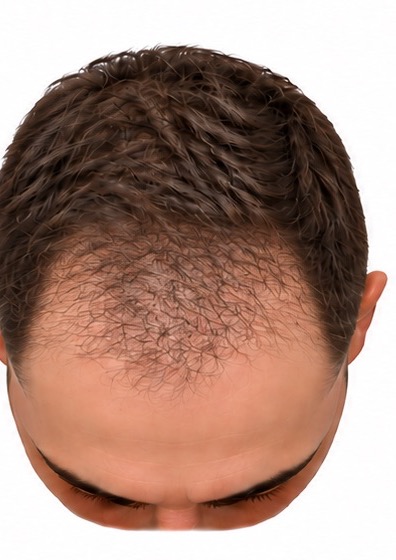 Month 6
Growth shows
Month 6
Growth shows
-
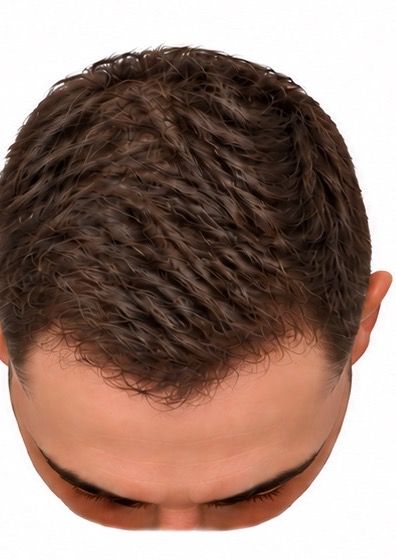 Month 12
Final result
Month 12
Final result
Week 1: Immediate Post-Op
In the first week, the transplanted area will have small scabs around each graft. Mild swelling around the forehead is common on days 2-4 and typically resolves within a week. The donor area (back of the head) shows tiny dot marks from FUE extraction or a thin linear scar from FUT.
What's normal: Redness, pinpoint bleeding on day 1, mild swelling, tightness in the donor area. The transplanted hairs are visible but sit slightly above the scalp surface.
Month 1: The Shock Loss Phase
Around weeks 2-4, most transplanted hairs fall out. This is called "shock loss" and it's completely normal - it happens in 90-95% of patients. The follicles remain alive beneath the surface; only the hair shafts shed.
This is the phase that panics most patients. You can look worse than before the procedure. Knowing this in advance is critical.
Month 3: Early Signs of Growth
New hairs begin sprouting as thin, fine strands. They may appear lighter in color or curlier than your natural hair - this is temporary. At 3 months, roughly 20-30% of the transplanted follicles are producing visible hair.
Coverage is still sparse. Don't judge your result at this stage.
Month 6: Visible Transformation
This is when results become genuinely noticeable. Around 50-60% of transplanted hairs are growing, and they're thickening in diameter. The hairline starts to take its designed shape, and coverage in the crown (if grafted) begins filling in.
Most patients start feeling confident about their decision at month 6.
Month 12: Final Result
Full maturation occurs between months 12 and 18. Hair has reached its final thickness, color, and texture. The transplanted hairs now grow in the same cycle as your natural hair and are permanent - they're taken from the DHT-resistant donor zone at the back of the head.
At this point, what you see is what you keep.
Hair Transplant Results by Graft Count
The number of grafts directly determines how much coverage and density you'll achieve. Here's what different graft counts typically look like in before and after results.
-
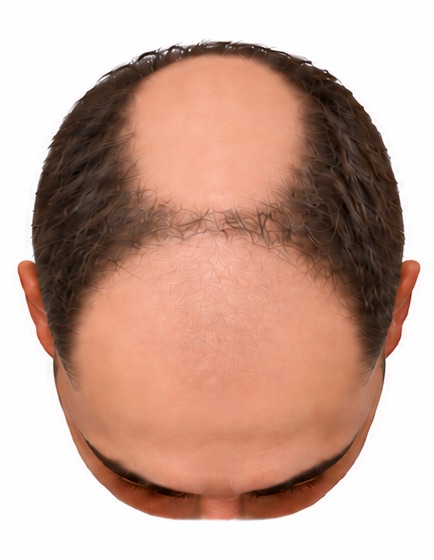 Before
Starting point
Before
Starting point
-
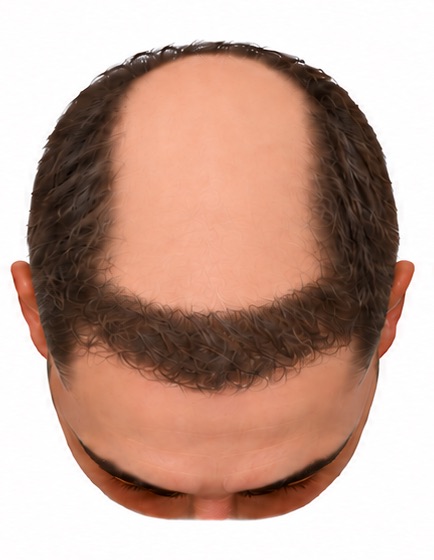 ~1,000
Hairline and temples
~1,000
Hairline and temples
-
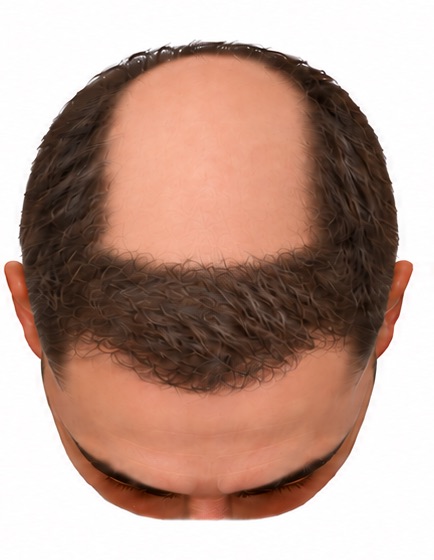 ~2,000
Front third
~2,000
Front third
-
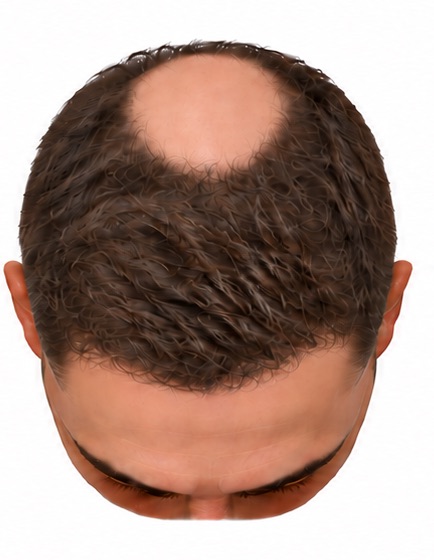 ~3,000
Through the midscalp
~3,000
Through the midscalp
-
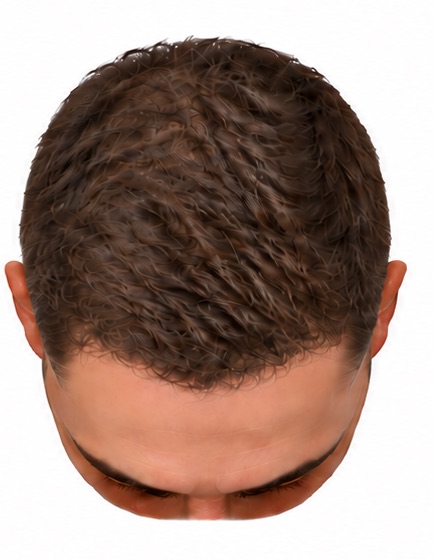 ~4,000+
Through the crown
~4,000+
Through the crown
1,000 Grafts: Hairline Refinement
Best suited for early-stage recession (Norwood 2) or temple point restoration. Don't expect dramatic density change - 1,000 grafts refine rather than rebuild. At the ฿36-123 per graft patients report across five Bangkok clinics (31 reports and quotes, 2023 to 2025), 1,000 grafts is ฿36,000-123,000 ($1,090-$3,710). Dollars at ฿33.14 = $1 (European Central Bank reference rates, 22 September 2026).
Realistic expectation: A stronger, more defined hairline. Not a thick mane. Think "polished" not "transformed."
2,000 Grafts: Moderate Restoration
The most common graft count for first-time patients. Covers the frontal third of the scalp with good density, or provides lighter coverage across a larger area. Enough to make a visible difference that others notice.
Realistic expectation: A clearly improved hairline with enough density to style naturally. Some patients split grafts between hairline and midscalp.
3,000 Grafts: Significant Coverage
Opens up more possibilities - full frontal restoration with good density, or moderate density from hairline through crown. Many Bangkok clinics perform 3,000-graft sessions routinely in a single day (6-8 hours).
Realistic expectation: A substantial visual change. Enough coverage that the transplanted area blends naturally with existing hair. Friends and family will notice.
4,000+ Grafts: Extensive Restoration
Maximum single-session coverage. Addresses advanced hair loss across multiple zones. Requires an excellent donor area with sufficient density. Not all patients are candidates for 4,000+ grafts in one session - donor capacity is the limiting factor.
Top Bangkok clinics like Absolute Hair Clinic regularly perform sessions up to 4,500 grafts.
Realistic expectation: Dramatic improvement, but 4,000 grafts still won't create teenage-density hair across the entire scalp. Strategic distribution matters as much as total count.
Results by Norwood Level
The Norwood Scale classifies male pattern baldness from NW1 (no recession) to NW7 (extensive loss). Your Norwood level determines what's achievable.
-
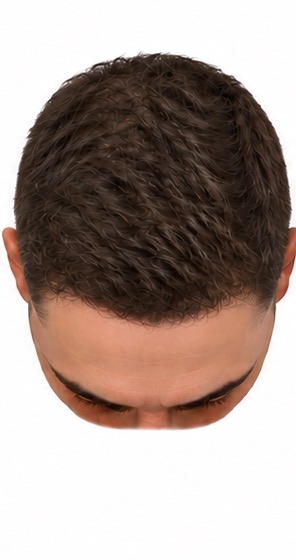 Norwood 1
No recession
Norwood 1
No recession
-
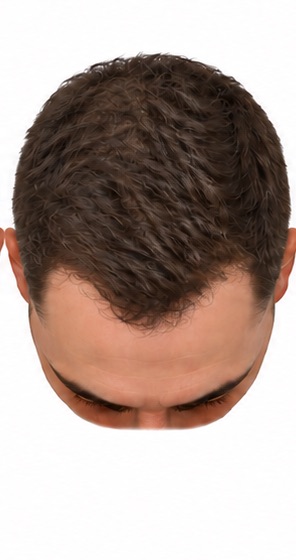 Norwood 2
Temples recede
Norwood 2
Temples recede
-
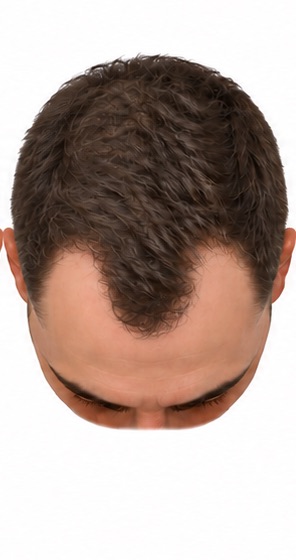 Norwood 3
Deeper temples
Norwood 3
Deeper temples
-
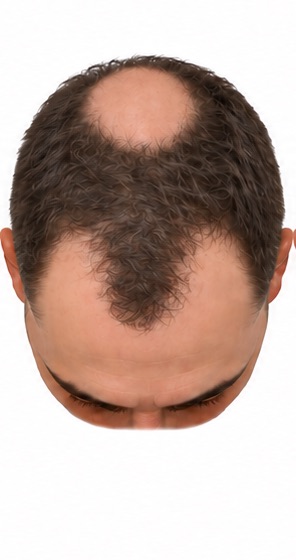 Norwood 4
Crown thins too
Norwood 4
Crown thins too
-
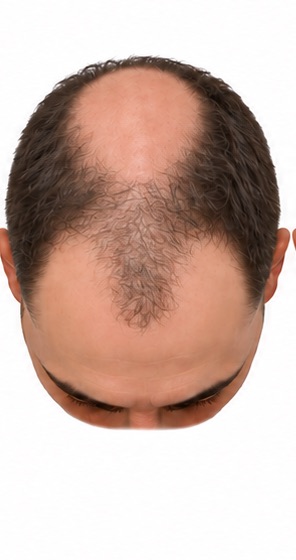 Norwood 5
Bridge narrows
Norwood 5
Bridge narrows
-
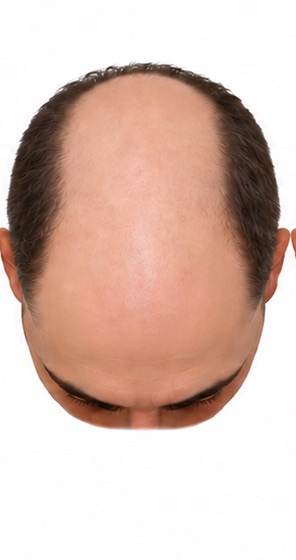 Norwood 6
Bridge gone
Norwood 6
Bridge gone
-
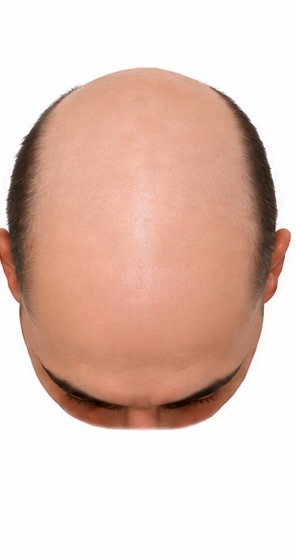 Norwood 7
Side band only
Norwood 7
Side band only
Norwood 2: Minimal Recession
- Typical grafts needed: 800-1,500
- What to expect: Natural hairline restoration with excellent density. Results are subtle - "did he get a new hairstyle?" not "did he get a transplant?"
- Success rate: Very high. Small procedures with focused grafting produce predictable, consistent results.
Norwood 3: Classic Recession
- Typical grafts needed: 1,500-2,500
- What to expect: Restored temples and a solid frontal hairline. This is the "sweet spot" where transplants deliver the most impactful visual change relative to graft count.
- Recommended timing: NW3 is widely considered the ideal stage for a first transplant - enough loss to justify the procedure, enough donor hair for excellent results.
Norwood 4: Significant Loss
- Typical grafts needed: 2,500-3,500
- What to expect: Full frontal restoration with moderate midscalp coverage. Crown work is possible but may require a second session for maximum density.
- Important caveat: Patients should discuss whether ongoing hair loss (behind the transplanted zone) may require medication (finasteride/minoxidil) to maintain the overall look.
Norwood 5: Advanced Loss
- Typical grafts needed: 3,500-4,500 (often across two sessions)
- What to expect: Meaningful improvement but not full head coverage at high density. Surgeons typically prioritize the frontal zone and midscalp for maximum visual impact. Crown coverage may be secondary.
- Honest reality: NW5 patients must accept that a transplant creates the illusion of fuller hair through strategic placement - it doesn't restore pre-loss density across the entire scalp.
FUE vs DHI: How Technique Affects Results
Both FUE and DHI extract individual follicles from the donor area. The difference is in how grafts are implanted - and this affects the final look.
FUE Results
How it works: Grafts are extracted, stored in a preservation solution, then implanted into pre-made recipient sites using forceps.
What results look like:
- Natural growth direction when performed by an experienced surgeon
- Tiny, nearly invisible extraction scars in the donor area
- 90-95% graft survival rate with experienced Bangkok surgeons
Best for: Large sessions (3,000+ grafts), crown coverage, body hair transplants.
DHI Results
How it works: Grafts are loaded directly into a Choi Implanter Pen, which creates the recipient site and implants the graft in a single motion. Less time outside the body means less stress on the follicle.
What results look like:
- Higher density achievable in smaller areas (the pen allows closer graft spacing)
- More precise control over angle and direction of each hair
- 92-97% graft survival rate (reduced ischemia time)
- Slightly faster healing in the recipient zone
Best for: Hairline work requiring precise angle control, adding density between existing hairs, patients who want maximum precision.
HairTran Clinic and Hairsmith Clinic include the implanter pen technique at no extra charge. Only CosmoPrime lists a DHI rate, ฿60-90 per graft, in a general price table on its own site.
How to Evaluate Before and After Photos
Not all before and after galleries are created equal. Here's how to spot genuine results versus misleading marketing.
Red Flags to Watch For
- Different lighting: Before photos taken in harsh overhead light (emphasizes thinning), after photos in soft front-facing light (hides remaining gaps)
- Different angles: Before photos shot from above, after photos shot from eye level
- Different hair length or styling: Before with hair pulled back, after with hair styled forward and with product
- Different cameras or distances: Before taken at arm's length with a phone, after taken from farther away with better equipment
- Missing timeline: No mention of how many months post-procedure the "after" photo was taken
- Only showing best cases: Every clinic has outstanding results. Ask to see average results too.
- Filters or color grading: After photos appear warmer, more saturated, or slightly blurred
Signs of Legitimate Before/After Photos
- Same lighting conditions in both photos
- Same angle and distance from the camera
- Time stamp or date on each image
- Clear disclosure of graft count, technique, and months post-op
- Multiple angles (front, top-down, both sides)
- Progression photos showing intermediate stages (not just the final result)
- Cases showing a range of outcomes - not just the home runs
Questions to Ask Any Clinic
- How many months post-op are your "after" photos?
- Can I see the same patient at 3, 6, and 12 months?
- What percentage of your patients achieve results like the ones displayed?
- Can I see cases with a similar Norwood level and hair type to mine?
- Do you have before/after photos for the specific surgeon who would perform my procedure?
Graft Survival Rates: What Bangkok Clinics Report
Graft survival - the percentage of transplanted follicles that successfully take root and grow - is the single most important factor determining your result.
| Factor | Range | Notes |
|---|---|---|
| FUE graft survival | 90-95% | Standard with experienced surgeons |
| DHI graft survival | 92-97% | Reduced out-of-body time improves survival |
| FUT graft survival | 90-95% | Comparable to FUE |
| Non-shaven FUE | 85-92% | Slightly lower due to handling difficulty |
| Body hair transplant (BHT) | 70-85% | Different growth characteristics |
| Industry average (global) | 50-90% | Wide range depending on surgeon skill |
What this means practically: In a 2,500-graft FUE procedure with 92% survival, approximately 2,300 grafts will produce hair. That's roughly 200 grafts that won't grow - a small but real number.
Top Bangkok clinics like Hairsmith Clinic use HypoThermosol graft preservation solution to maximize viability during the time grafts spend outside the body. Hairsmith also offers a free touch-up after one year if areas haven't grown well - a confidence signal worth noting.
Factors That Affect Your Results
Two patients receiving the same graft count from the same surgeon can end up with noticeably different results. Here's why:
Donor Hair Quality
Thick, coarse hair provides more coverage per graft than fine hair. Asian hair (thicker shaft, round cross-section) often produces visually denser results per graft than fine Caucasian hair.
Hair-to-Skin Color Contrast
Dark hair on light skin shows scalp more than dark hair on darker skin. Lower contrast between hair and skin creates a fuller appearance - something the surgeon considers during hairline design.
Scalp Laxity
A flexible, loose scalp allows better graft placement and can lead to higher graft survival. Tight scalps may limit how many grafts can be placed in a single session.
Post-Op Care Compliance
Following aftercare instructions during recovery - no touching grafts, sleeping elevated, avoiding strenuous exercise, taking prescribed medications - directly impacts graft survival. Non-compliance is one of the leading causes of poor results.
Surgeon Experience and Technique
This is the variable that matters most. An ABHRS-certified surgeon with 4,000+ procedures has fundamentally different skill than a general dermatologist who performs transplants occasionally. In Bangkok, look for surgeons with ABHRS and ISHRS credentials - clinics like Absolute Hair Clinic (Dr. Laorwong, Dr. Panchaprateep) and Hairtran Clinic (Dr. Patty) hold both.
Ongoing Hair Loss
A transplant addresses current loss but doesn't prevent future thinning in untreated areas. Without medication (finasteride, minoxidil) or supportive treatments (PRP), native hair behind the transplanted zone may continue to thin - creating an unnatural "island" of thick transplanted hair surrounded by thinning native hair.
Setting Realistic Expectations
Here's the honest truth about hair transplant results in Bangkok - or anywhere:
A hair transplant redistributes hair. It doesn't create new hair. Every graft placed in the recipient area is one fewer follicle in the donor zone. There's a finite supply.
Density is relative. A full head of hair contains roughly 100,000-150,000 follicles. A 3,000-graft transplant (approximately 6,000-7,500 individual hairs) adds meaningful density, but it won't replicate the density of a 20-year-old who never lost hair.
Strategic placement creates the illusion of fullness. Skilled surgeons in Bangkok focus on the areas that matter most visually - the hairline and frontal zone - where even moderate density creates a dramatic improvement in appearance.
Results are permanent but your hair loss may not be done. Transplanted hairs are DHT-resistant and will grow for life. But native hairs around them may continue to thin with age, potentially requiring medical management or a future touch-up session.
Bangkok-specific advantage: The cost savings mean that multi-session strategies become financially viable. New York clinics Maxim and Nova Medical publish $3.95-$7.99 per graft, so 2,000 grafts there is $7,900-$15,980. At the ฿36-123 per graft patients report in Bangkok, a 2,500-graft session plus a later 1,500-graft touch-up is ฿144,000-492,000 ($4,350-$14,850). That is our arithmetic, not a quote.
Frequently Asked Questions
How long until I see my final hair transplant results?
Full results take 12-18 months. You'll see meaningful growth by month 6, but hair continues thickening and maturing through month 12-18. Evaluating your outcome before month 12 is premature.
Will my transplanted hair look natural?
With an experienced surgeon, yes. Natural-looking results come from proper hairline design (irregular, age-appropriate), correct hair angle and direction, and appropriate density distribution. Bangkok's top ABHRS-certified surgeons specialize in creating undetectable hairlines.
How many grafts do I need for good results?
It depends entirely on your hair loss pattern. Norwood 2-3 patients typically need 1,000-2,500 grafts. Norwood 4-5 may need 3,000-4,500. A clinic consultation with scalp analysis provides the most accurate estimate.
Are before and after results from Bangkok clinics real?
Reputable clinics show unedited patient photos with consent. Look for consistent lighting, matching angles, disclosed timelines, and graft counts. Clinics offering video documentation of procedures (like Dr.Top Hair Hospital, which records entire procedures) add an extra layer of transparency.
Can I get the same results as someone with a different hair type?
Hair type significantly affects outcomes. Thick, dark, wavy hair produces the most visually dense results per graft. Fine, straight, light hair requires more grafts for equivalent visual coverage. Your surgeon should set expectations based on your specific hair characteristics.
What happens if my grafts don't grow?
Reputable clinics address this. Hairsmith Clinic offers a free touch-up after one year for areas with poor growth. Overall, with an experienced surgeon, 90-97% of grafts should survive and produce hair. Complete graft failure across a procedure is extremely rare at quality clinics.
Do Bangkok hair transplant results compare to US or European clinics?
Bangkok's top surgeons hold the same ABHRS certification as leading surgeons in the US and Europe. The techniques are identical. The difference is cost - not quality. Clinics like Absolute Hair Clinic have surgeons who are fellows of ISHRS with international recognition, including the Platinum Follicle Award.
Should I take finasteride or minoxidil after my transplant?
Many surgeons recommend it to protect existing native hair from continued thinning. The transplanted hairs themselves don't need medication - they're DHT-resistant. But untreated native hair around the transplant may continue to thin, affecting the overall aesthetic over time. Discuss this with your surgeon during consultation.
See What Bangkok Can Do for Your Hair
Ready to explore what's possible for your specific case? The clinics featured in our Bangkok hair transplant guide offer free consultations - including online photo assessments for international patients.
Send your photos, discuss your goals, and get a personalized graft estimate before committing to anything. No pressure, no obligation.
Your hair transplant journey starts with understanding what's realistic. Now that you know the timeline, the techniques, and what real results look like - the next step is finding the right surgeon for your situation.
Get Your Free Hair Loss Assessment
Upload your photos and get a personalized graft estimate from verified Bangkok clinics. No pressure, no obligation.