BBL Recovery: Timeline, Risks and Planning Your Stay in Thailand (2026)
Recovery after a Brazilian butt lift in Thailand includes initial healing after liposuction and protecting the grafted fat, with limits on sitting, sleeping and exercise described in ASPS's recovery article. ASPS's 2022 article reports return to work between days seven and 10, while its 2016 blog says no direct sitting for at least eight weeks, so ask the operating surgeon for a follow-up and fitness-to-fly plan before booking your return journey.
Clinics cannot pay to be listed or ranked higher on AsiaPatient.
What a BBL involves, and why recovery has two parts
The UK's National Health Service (NHS) describes surgical fat transfer as moving fat between body areas. A Brazilian butt lift, or BBL, transfers fat into the buttocks.
The NHS describes removal through small skin cuts using a thin tube, separation of the fat from blood and other fluids, then injection of small amounts. Ask which areas the surgeon would use to collect your fat.
The American Society of Plastic Surgeons (ASPS) describes bruising and swelling where fat was removed, alongside restrictions on pressure over the buttocks. Ask for instructions covering both the donor areas and the areas receiving fat.
Cleveland Clinic distinguishes BBL from a butt lift that removes excess fat and sagging skin without increasing buttock size. Confirm the exact operation before using any recovery instructions labeled simply "butt lift."
Brazilian butt lift recovery week by week: published milestones, not a personal schedule
These are separate published milestones. Use them to discuss leave and aftercare with your surgeon, rather than choosing a date to resume an activity yourself.
The 2016 blog is surgeon-authored. The 2022 article reports individual surgeons' statements.
| Stage | What the source says | Question for your surgeon |
|---|---|---|
| First days | ASPS's 2022 article describes four to five early recovery days. The 2016 ASPS blog says walking commonly starts in a day or two. | What movement and help will I need after discharge? |
| First two weeks | The British Association of Aesthetic Plastic Surgeons (BAAPS) advises keeping pressure off grafted areas for the first two weeks. | How should I sit and sleep, and when will you review those restrictions? |
| Returning to work | ASPS's 2022 article reports return between days seven and 10, with a pillow for desk work. The NHS says patients may want a couple of weeks off after fat transfer. | How much leave fits my duties and commute? |
| Around one month | The 2016 ASPS blog places light activity after one month. | Which activities count as light for my operation? |
| Six to eight weeks | The same ASPS blog places most normal activity at six to eight weeks. | When should I be assessed before resuming exercise? |
| Later months | ASPS's 2022 article says fat-loss risk declines around month three. The NHS says results can take up to six months. | When will you assess the result? |
The sitting and garment advice also differs between these sources, as shown below. Ask your surgeon to give you one written plan for your own operation.
Sitting, sleeping and compression garments after a BBL
BAAPS's safety review advises keeping pressure off the grafted areas for the first two weeks. It says compression garments are often recommended by surgeons performing these procedures.
The 2016 ASPS blog gives a longer restriction: no direct sitting for at least eight weeks and no sleeping on the back for the first eight weeks. It describes eight weeks of compression over liposuction areas, with the garment's rear often cut out to avoid compressing the transferred fat.
The 2022 ASPS article reports at least one month of garment wear and care to avoid prolonged buttock pressure for six weeks. It describes a BBL pillow that moves pressure onto the thighs.
Ask the surgeon to demonstrate the position they want you to use. How should you manage meals, toilet use and transport while following the pressure restrictions?
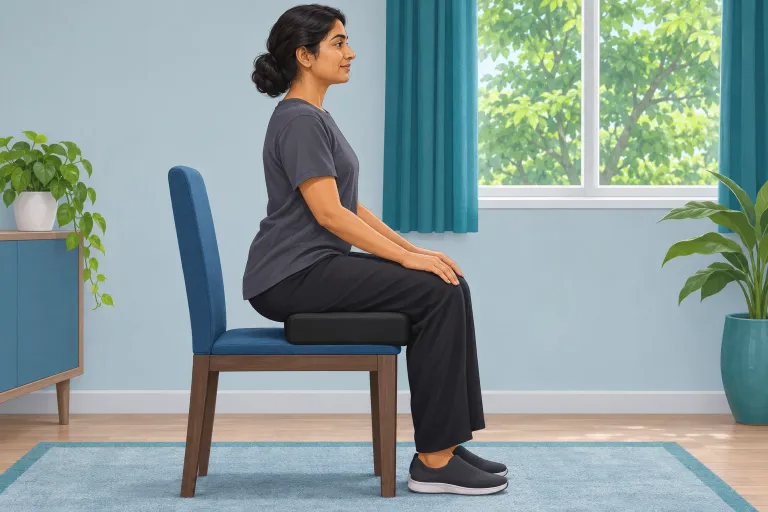
Request written garment instructions, including which areas it should cover and when it can come off. Ask who checks the fit and what to do if it feels uncomfortable.
When can you sit without a pillow?
Centre for Surgery tells patients to avoid direct sitting for 2 weeks, then allows short spells without a pillow from week 3. It says many people keep the pillow for longer sits until around week 6.
Cadogan Clinic asks patients to avoid sitting or lying directly on the bottom for up to 8 weeks, and says the exact length depends on the extent of surgery and is directed by the surgeon, so don't use another clinic's date as permission to remove your pillow.
Cadogan Clinic permits sitting on the toilet but advises avoiding sitting there for longer than 10 minutes. That limit concerns toilet visits; ask your own team for its bathroom instructions.
Centre for Surgery places long-haul flights around week 6, subject to surgeon agreement. It advises discussing any earlier short flight with the surgeon before booking.
The CDC Yellow Book says travel after surgery adds blood-clot risk because it can involve long periods seated. Discuss that risk as well as the instructions for keeping pressure off the treated area.
Ask the airline about the arrangements your surgeon has proposed:
| Arrangement | Question for the airline |
|---|---|
| Using your cushion | Can I use this cushion in my assigned seat, and when must I put it away? |
| Keeping the required position | Do the seat and seat-belt rules allow the position my surgical team described? |
| Following movement instructions | At which stages of the journey must I remain seated? |
| Getting assistance | What assistance can I arrange in advance, and how do I request it? |
Send the airline's answers to the surgical team before booking so it can assess whether those arrangements fit your restrictions.
Ask your surgeon for separate written instructions on sitting with a pillow or cushion behind the legs and sitting directly without one. ASPS's recovery guidance says to avoid prolonged sitting for about two weeks, with some surgeons preferring longer.
BBL recovery time, swelling and when results settle
The NHS says bruising and swelling may last a few weeks after surgical fat transfer. Results can take up to six months as some injected fat may be reabsorbed during the first few months.
What BBL fat survival means
Fat survival, or fat retention, means how much transferred fat remains after healing.
Some transferred fat might not survive, according to the NHS. It says that after a BBL further surgery may be needed, either because about 50% of the injected fat doesn't survive or because the desired volume isn't achieved in one operation.
A surgeon quoted in ASPS's 2022 article says that, on average, about 60% of the transferred fat survives, with the remaining 40% reabsorbed.
In a separate ASPS article from 2022, Dr. J. Peter Rubin estimates that the body will absorb 20% to 40% of the injected fat during healing. He says the buttocks' appearance around month three will be a pretty good indicator of what will stay.
Keep those estimates separate when asking about expected volume. Ask when your surgeon would assess fat loss and how they would discuss further treatment if you remain dissatisfied.
Is a BBL safe? The safety questions to ask before surgery
The NHS says BBL surgery has the highest death rate of all cosmetic procedures, and that the main concern is injected fat blocking a blood vessel in the lungs, which can be fatal.
BAAPS recommends ultrasound during surgery to confirm the position of the cannula, the tube used to inject fat.
BAAPS recommends doing treatment in separate stages rather than injecting more deeply when more volume is wanted. It also says mortality risk should be discussed with every prospective patient.
Use those recommendations to ask specific questions at consultation:
BBL risks to discuss at consultation
Fat reabsorption and complications need separate discussion. The NHS describes loss of injected fat, fat necrosis and fat embolism; fat necrosis means fat tissue dies, while fat embolism involves fat blocking a blood vessel.
BAAPS's review lists death and sepsis among serious risks.
The same BAAPS review includes deep vein thrombosis (DVT) and pulmonary embolism. These involve a clot in a deep vein or a blockage in a lung blood vessel.
Ask how your health and the planned operation affect these risks. Request written instructions on symptoms that need urgent assessment and where to seek care after discharge.
Ask about bleeding, fluid collections and changes in sensation, as well as uneven shape or asymmetry. What would the team do if a concern develops, and who would assess you after you return home?
Symptoms that need immediate medical attention after a BBL
Seek medical attention immediately for shortness of breath, chest pain or an unusual heartbeat after buttock surgery. The American Society of Plastic Surgeons gives this advice in its buttock enhancement recovery guidance. The Centers for Disease Control and Prevention (CDC) also advises medical travelers not to delay care for a suspected complication during travel or after returning home.
When seeking care, explain that you recently had a BBL abroad and bring the operation information the hospital gave you. Tell the clinician which areas had liposuction and where fat was transferred, using the surgical details you received. Include when and where the operation took place. If a companion is helping you, have them ready to share that information too. Do not wait for a routine appointment or an online reply before seeking help for those symptoms.
Arrange drain and dressing care before discharge
Cleveland Clinic says some BBL patients need a temporary drain in an incision to remove excess blood or fluid.
If you will leave with a drain, have a nurse demonstrate its care with the person helping you present. Ask how to keep the tube secure while following your BBL movement instructions. Find out whether to note the fluid amount and which changes need a call to the team.
Have the nurse show which dressings need changing and which supplies to take to your accommodation. Settle who will do the changes between visits. At the wound check, ask who decides when the drain can come out and how another visit would be arranged if it is still needed. Give the team your travel dates so that appointment can be planned.
Pain relief and help in the first days
ASPS's recovery guidance says you will be monitored in a recovery area and may be allowed home after a few hours. If your operation is outpatient, its preparation guidance advises arranging someone to drive you to and from surgery and someone to stay with you for at least the first night. For an outpatient procedure in Thailand, arrange that help alongside your accommodation.
In ASPS's 2022 recovery article, Dr. Steven Williams describes mild to moderate pain, with most patients needing pain medication for the first four to five days. ASPS's recovery guidance says your instructions may include medicines to apply or take by mouth to aid healing. Ask your surgeon which medicines you will receive or be prescribed after surgery.
Are you a candidate, and what are the alternatives?
Ask whether you have enough donor fat for the change you want and whether the proposed operation suits your health. What would the surgeon advise if there isn't enough fat or you can't follow the recovery restrictions?
Cleveland Clinic describes a skin-removal butt lift as removing excess fat and sagging skin without adding size. BBL uses liposuction and fat injection, so ask which approach addresses your goal and how its recovery would differ.
Ask the surgeon to explain alternatives, including choosing no operation. A consultation should leave you with answers about the proposed treatment, its risks and the aftercare you would need.
What this means if you are flying to Thailand for a BBL
Ask the hospital to put the BBL follow-up schedule beside your proposed return flight. Which appointments must take place in Thailand, and when will the surgeon assess whether you can fly?
Keep hospital admission, time near the surgical team and permission to travel as separate questions. Ask the team to confirm each in writing for the exact operation you are considering.
Describe your full route, including connections and the journey from the airport. Ask the surgeon how to follow the aftercare instructions throughout that trip and what arrangements to make if your stay needs extending.
In this section: BBL in Thailand, what a BBL costs in Thailand, skinny bbl BBL and is it safe BBL.
Frequently asked questions
How long is BBL recovery?
ASPS's 2022 article describes four to five initial recovery days and longer pressure precautions. The NHS gives up to six months for results, so ask separately about daily activities and result assessment.
What does BBL recovery look like week by week?
ASPS's 2016 blog distinguishes early walking, later light activity and return to most normal activity; ask which milestones apply to your operation.
How long after a BBL can I sit without a pillow?
Ask your surgeon when you can sit without a pillow, with separate written instructions for pillow-assisted and direct sitting. ASPS's recovery guidance says to avoid prolonged sitting for about two weeks, with some surgeons preferring longer. A 2016 ASPS blog post by one surgeon advises no direct sitting for at least eight weeks and says to keep using a cushion after that.
How much fat survives after a BBL?
In ASPS's 2022 article, Dr. J. Peter Rubin estimates that the body will absorb 20% to 40% of the injected fat during healing. Ask your surgeon how much fat they expect to remain in your case.
When can I return to work or exercise after a BBL?
ASPS's 2022 article reports work between days seven and 10 with a pillow for desk work. Its 2016 blog places most normal activity at six to eight weeks; ask your surgeon for clearance for your job and exercise routine.
Is a BBL safe?
The NHS says BBL surgery has the highest death rate of all cosmetic procedures and describes fat embolism as potentially fatal. BAAPS says the risk of death should be discussed with every prospective patient.
What are the main BBL risks?
BAAPS lists fat embolism, death, fat loss, fat necrosis, sepsis, skin necrosis, DVT and pulmonary embolism. Use the risks section above to prepare questions about prevention, urgent assessment and care after returning home.
Read next
- Skinny BBL: who it suits and what it costs in ThailandWhat a skinny BBL means, how much donor fat it needs, who may suit it, the safety rules, recovery and what Thai hospitals and clinics print for it.
- Butt implants or a BBL: which one and whyHow butt implants and fat-transfer BBLs differ in material, donor-fat needs, recovery, risks and questions to discuss in Thailand.
- Hip dip surgery: fat transfer or implantsWhat hip dips are, the surgical options used to alter contour, their limits, recovery and risks for readers considering treatment in Thailand.
- Sculptra BBL vs BBL: surgery, injections and the tradeoffsHow a Sculptra BBL differs from a fat-transfer BBL, what the small studies report and what no study has compared.
Ask the Hospital How Long to Stay Before You Fly Home
Tell us the procedure, your budget and your dates, and any hospitals you are considering.
Get My Free Quote →Free, no obligation. Nothing goes to a clinic without your OK.