Butt Implants vs BBL in Thailand: Differences, Recovery and Risks
Butt implants use silicone-filled devices placed in buttock tissue; a Brazilian butt lift, or BBL, transfers your own fat from another area, according to the American Society of Plastic Surgeons (ASPS). The ASPS procedure guide says available fat, skin characteristics and your goals are among the factors used to choose a technique.
If you are considering fat transfer in Thailand, see BBL in Thailand. Before considering either operation, ask the surgeon to explain its risks and how the proposed plan fits your starting point.
Clinics cannot pay to be listed or ranked higher on AsiaPatient.
Butt implants and BBL use different materials and steps
ASPS describes implants as silicone-filled devices placed deep within buttock tissues. Fat grafting moves fat from another part of the body. ASPS says augmentation sometimes combines implants and fat grafting.
Ask whether the proposed operation involves an implant alone, fat transfer alone or both. If both are proposed, request an explanation of each component and its aftercare.
How butt implants are placed
ASPS describes placement within the muscle or above the gluteal muscle on each side. The gluteal muscles are the muscles of the buttocks.
Ask the surgeon to show you the planned implant position on a diagram. Have them mark the incision, explain its expected length and location, and describe how the wound will be closed and checked.
Discuss the proposed implant itself: which device would be used, why that size and placement are being considered, and what could lead to another operation. Ask how those answers would change if fat transfer were added.
How a Brazilian butt lift uses donor fat
The NHS surgical fat transfer guide describes small skin cuts and a thin tube to remove fat. The fat is separated from blood and other fluids, then injected in small amounts into the treatment area.
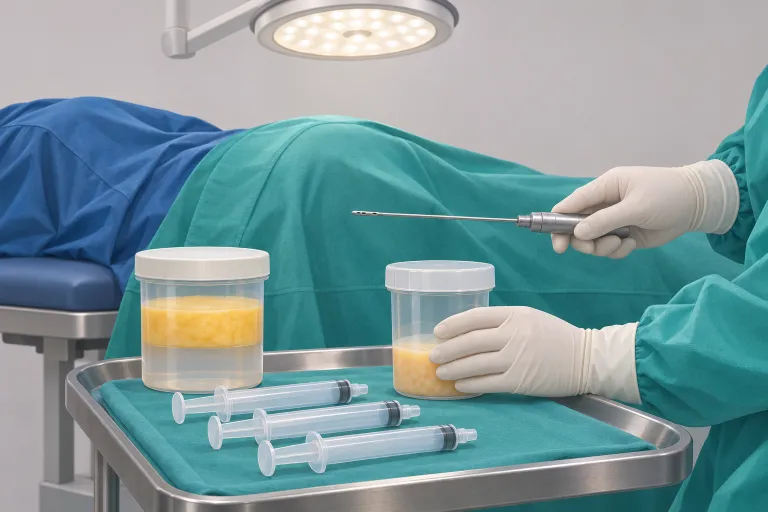
Published fat-survival figures differ. ASPS gives average retention of 60 to 80%, while the NHS says about 50% of injected fat doesn't survive in a BBL.
Further surgery may be needed, according to the NHS. Ask the surgeon how possible fat loss affects the plan and whether another procedure would be considered.
What may limit each approach
ASPS lists buttock size and shape, fat available for liposuction, goals and activity level as assessment factors. It also includes skin quality, elasticity and the amount of extra skin.
Take your priorities to the consultation, including the changes you want and the recovery restrictions you could manage. Ask which findings from the examination support the proposed operation, and what alternatives the surgeon would discuss.
Donor fat and body composition
For fat transfer, the amount available for harvesting is part of the ASPS assessment. Ask whether there is enough suitable donor fat for the proposed plan and which areas would be treated with liposuction.
If the surgeon proposes implants because of limited donor fat, ask them to explain the implant-specific risks and recovery requirements. Ask what happens if the assessment suggests that your requested change is unlikely to be achievable.
Loose skin and adding volume are different surgical questions
ASPS describes a gluteal lift as removing excess sagging skin and fat. It says this lift doesn't itself enlarge the buttocks and may be performed separately or as part of a body lift.
If loose skin is one of your concerns, ask whether the proposed operation addresses it. Have the surgeon distinguish any skin-removal surgery from the implant or fat-transfer component, including the separate incision and recovery instructions.
Risks in the evidence are different, and neither option is risk-free
The reviews below report complications in published implant and fat-transfer groups. Their abstracts don't identify a country for the pooled populations.
Implant risks described in the reviews
One 2016 systematic review by Sinno and colleagues included 44 articles. In its 2,375 silicone-implant patients, the reported overall complication rate was 21.6%; the pooled population's country isn't stated in the abstract.
In that implant group, Sinno's review reported wound opening at 9.6%, fluid collection at 4.6%, infection at 1.9% and temporary sciatic sensation changes at 1.0%. The medical terms include wound dehiscence for wound opening, seroma for fluid collection and paresthesia for altered sensation.
The same 2016 review reported a 9.9% overall complication rate among 3,567 patients receiving their own fat by injection. These are separate groups within one review.
One 2023 review by Oregi and colleagues reported an overall complication rate of 25% across 524 implant procedures. It reported 13% across 1,788 fat-augmentation procedures; the abstract doesn't state a country for these pooled populations.
For implants, Oregi's review lists wound opening, excessive implant palpability (being able to feel the implant) and fluid collection among the most common complications. Ask the surgeon how they discuss these risks and how a complication would be managed.
Brazilian butt lift risks and the injection-plane safety issue
The NHS identifies injected fat blocking a blood vessel in the lungs as the main BBL concern. It says this can be fatal and also lists fat necrosis, the death of fat tissue.
BAAPS says fat should only be injected into the subcutaneous space, the layer beneath the skin, avoiding injection into muscle. It calls for ultrasound during surgery to confirm the position of the cannula, the tube used to inject fat.
The multi-society advisory hosted by ASPS says research findings suggest mortality risk can be minimized when fat grafting is confined to the subcutaneous space. Ask the surgeon to explain the planned injection layer and how it will be checked.
BAAPS also lists fat loss, infection, deep vein thrombosis (a blood clot in a deep vein) and pulmonary embolism (a blockage in a lung artery). Its review says the risk of death should be discussed with every prospective patient.
Recovery and aftercare: what is known, and what must be confirmed for Thailand
Ask for recovery instructions that name your actual operation. For implants, request a wound-review schedule and instructions for sitting, sleeping and returning to activity; for a BBL, request instructions for the areas treated with liposuction and the areas receiving fat.
BBL pressure restrictions. The British Association of Aesthetic Plastic Surgeons (BAAPS) safety review says pressure should be kept off grafted areas for the first two weeks. It says surgeons often recommend compression garments, but evidence on their safety and efficacy is lacking and there is no consensus on how long to wear them.
A 2022 ASPS article reports individual surgeons' advice, including avoiding undue or prolonged buttock pressure for six weeks. It describes a BBL pillow that transfers pressure to the thighs.
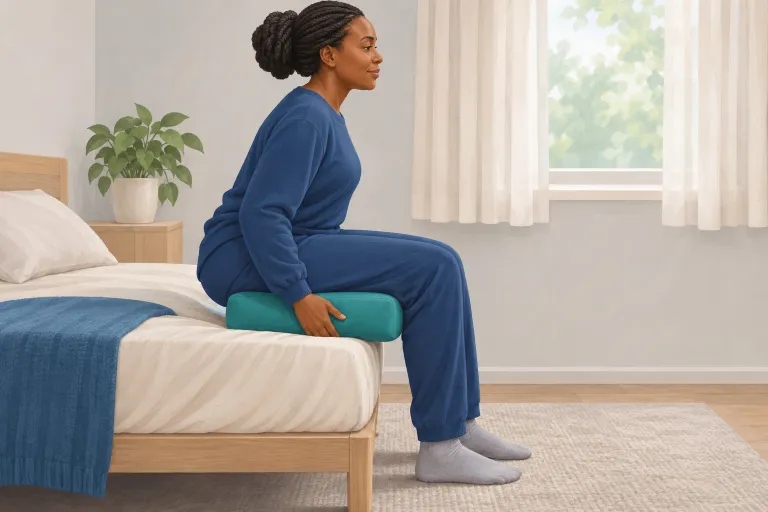
Work and garments. That ASPS article reports return to work between days seven and 10, with cushioning for desk work, and garments for at least one month. These are the article's reported instructions; ask your surgeon for the schedule that applies to your job and operation.
For implants, ask when the wound and implant position will be reviewed. Confirm whether drains or stitches need removal, who would do it, and what restrictions apply until that appointment.
For either operation, ask who handles concerns about your care outside appointment hours and after you return home. Request instructions for a delayed recovery, including how extra local appointments would be arranged.
The BBL recovery in Thailand guide covers the fat-transfer recovery discussion in more detail. Take the surgeon's written instructions into your planning for work, accommodation and follow-up.
What Thai hospitals and clinics say about treatment and pricing
Ekachai Hospital's public list labels separate operations as "Buttock Implants" and "Buttock lifting with Fat Transfer". Ask the hospital to name the exact operation being proposed in your treatment plan.
Assessment and quote questions for a Brazilian butt lift in Thailand
Yanhee Hospital's butt-lift page describes its BBL as using fat harvested from the waist, flanks or thighs and placed only in the subcutaneous layer. Its pricing wording is: "Quoted at consultation, since it is priced with the liposuction."
Request written answers to these questions before making arrangements:
- Which donor areas would be treated, and how would the surgeon assess whether enough fat is available?
- Where would fat be injected, and would ultrasound be used to check the injection tube's position?
- What hospital stay and follow-up appointments are planned specifically for the BBL?
- Which garments, medications and aftercare visits are included in the quote?
- What happens if the proposed operation changes after the examination?
Keep the BBL plan separate from a skin-removal butt lift. Yanhee's page describes the two procedures separately and quotes the BBL with liposuction at consultation.
Hospital stay rows
Ekachai Hospital lists general anesthesia and one admission night for buttock implants. Its fat-transfer buttock-lifting row lists general anesthesia and three admission nights.
Yanhee's public price list prints two hospital nights for its Sebbin or Silimed round buttock implants and its Motiva buttock implants. Its augmentation page says added liposuction, flights and accommodation beyond the stated stay are excluded.
Ask for the dates of the wound review and any stitch removal, plus the surgeon's assessment of when you can travel. Confirm who would reassess you if healing changes those plans, and how care would continue after departure.
For pricing detail, see BBL cost in Thailand. Ask for an itemized quote tied to your proposed operation and donor areas.
In this section: BBL in Thailand, what a BBL costs in Thailand, hip dips BBL, is it safe BBL, BBL recovery and skinny bbl BBL.
Frequently asked questions
What is the difference between butt implants and a BBL?
ASPS distinguishes silicone implants from fat grafting, which transfers your own fat into the buttocks. Ask which method, or combination, appears in your proposed treatment plan.
Are butt implants better than a BBL?
Discuss the options against the ASPS assessment factors, including available fat, skin characteristics and activity level. Ask the surgeon to explain the expected limitations and risks of each option for you.
Which BBL is safer?
BAAPS guidance calls for subcutaneous-only fat placement and ultrasound confirmation of the injection tube's position. Discuss this alongside the NHS warning that a lung blood-vessel blockage from injected fat can be fatal.
What are the disadvantages of a BBL?
The NHS description includes fat harvesting as well as injection, and warns that transferred fat can be lost. The BAAPS review also describes pressure restrictions during recovery and surgical risks.
What is butt implants recovery like?
Wound healing needs discussion: Sinno's implant review reports wound opening and infection among complications. Ask for implant-specific sitting and sleeping instructions, a wound-review appointment and guidance on returning to your usual activities.
What should I confirm before traveling to Thailand for butt implants or a BBL?
Confirm the operation, planned incision or donor areas, hospital nights and follow-up appointments in writing. Ask who will assess your readiness to travel and who you should contact with a concern after returning home.
Read next
- Hip dip surgery: fat transfer or implantsWhat hip dips are, the surgical options used to alter contour, their limits, recovery and risks for readers considering treatment in Thailand.
- Sculptra BBL vs BBL: surgery, injections and the tradeoffsHow a Sculptra BBL differs from a fat-transfer BBL, what the small studies report and what no study has compared.
- BBL cost: Thailand beside the US, UK and AustraliaWhat Thai hospitals print for a Brazilian butt lift, what US, UK and Australian sources give, and what each price covers.
- Is a BBL safe? The risks, and how surgeons lower themThe serious risks of BBL surgery, current safety guidance, questions about surgeon and facility, recovery and emergency planning in Thailand.
Ask Which Buttock Augmentation Option Fits Your Starting Point
Tell us the procedure, your budget and your dates, and any hospitals you are considering.
Get My Free Quote →Free, no obligation. Nothing goes to a clinic without your OK.