Otoplasty Recovery: Timeline, Headbands and Aftercare (2026)
The UK National Health Service (NHS) places bandage removal, if used, and non-dissolving stitch removal at 5 to 10 days, while Cleveland Clinic says otoplasty recovery can take up to 8 weeks. Ask the surgeon for your own timing on dressing and stitch removal and on activity limits; the American Society of Plastic Surgeons (ASPS) lists these among the questions to ask.
If you're considering otoplasty in Thailand, ask for the dressing review and follow-up dates before booking your return trip. Ask who you should contact if you have a concern after leaving Thailand.
Clinics cannot pay to be listed or ranked higher on AsiaPatient.
What ear pinning surgery recovery usually involves
Otoplasty changes the outer ear's size, shape or position. Cleveland Clinic describes ear pinning, ear reduction and ear augmentation, which adds tissue to small or underdeveloped ears.
Cleveland Clinic says the procedure is usually outpatient, meaning patients leave without an overnight admission. The NHS says same-day discharge is usual with local anesthesia, which numbs the area being treated.
The techniques behind different recovery plans
The NHS describes an incisionless technique using a needle to make cartilage more flexible, then stitches to hold its shape. It also describes surgery through a cut behind the ear, with small pieces of cartilage removed if needed.
The American Academy of Facial Plastic and Reconstructive Surgery (AAFPRS) describes cartilage trimming or removal, or permanent stitches without cartilage removal. Ask which technique is planned and whether any stitches need to come out.
Who needs an individual plan
Adults can have otoplasty, according to the NHS. Its advice also covers children and a separate nonsurgical option for babies: ear splints before 6 months, while cartilage remains soft.
The NHS says ear pinning is unsuitable for children younger than 5. Cleveland Clinic describes most procedures as taking place in children over 4.
Routine pinning or reshaping doesn't produce a noticeable hearing change, according to AAFPRS. A consultation about appearance should include what the operation can change and the aftercare that particular operation needs.
Otoplasty recovery timeline: the first days through eight weeks
Published schedules differ, including the headband and work instructions below. ASPS directs patients to ask their surgeon about dressing removal, exercise and follow-up.
| Period | Published otoplasty recovery milestones |
|---|---|
| First few days | Cleveland Clinic says to keep dressings clean and dry and sleep on your back without pressure on the ears. AAFPRS says soft dressings remain for a few days. |
| 5 to 10 days | The NHS gives this interval for bandage removal, if used, and stitch removal unless the stitches dissolve. Cleveland Clinic places the first dressing-removal visit at about 1 week. |
| Weeks 1 to 2 | Cleveland Clinic says most people spend about a week recovering at home before work or school. The NHS gives 1 to 2 weeks for most children to return to school. |
| Weeks 2 to 3 | Cleveland Clinic says visual improvement will probably be apparent in 2 to 3 weeks. The NHS says tenderness, numbness or tingling can last several weeks. |
| Weeks 4 to 6 | The NHS gives 4 to 6 weeks before swimming. |
| Around 8 weeks and beyond | The NHS places contact sports at around 8 weeks. Cleveland Clinic says recovery can take up to 8 weeks. |
Your otoplasty headband, dressing and sleep plan
Sources give headband times from 2 weeks (AAFPRS) to at least 3 months at night after surgery, which surgeon Joseph Mele says most plastic surgeons require, in an ASPS interview. Follow the operating surgeon's plan for your operation.
What the dressing does and when a headband replaces it
ASPS says dressings support the ear's new position and protect the surgical site from trauma. It warns that removing bandages may cause loss of some of the correction and may require another operation, even though itching and discomfort can occur underneath.
Ask the surgical team what to do if the dressing becomes uncomfortable or wet. Get instructions on who removes it and whether a headband replaces it.
Kamol Hospital describes a bulky bandage immediately after surgery, replaced within a few days by a lighter dressing similar to a headband. Ask which dressing you will have at each stage and when you can change it.
Why wear a headband?
The NHS says a night headband may be needed to protect your ears while you sleep. In an ASPS article about children, surgeon Nneamaka Nwubah says only stitches hold the ears in place until the tissue scars in and adheres, which is why she calls following post-op instructions paramount.
How long: compare the source schedules
- AAFPRS: a headband may be recommended for 2 weeks.
- NHS: patients may need a headband at night for several weeks.
- Surgeon Joseph Mele, quoted by ASPS: most plastic surgeons require a complete head wrap for at least a week after surgery and a headband at night for at least three months after surgery.
- Surgeon Jeffrey Roth, in a blog post on the ASPS site: 'we usually will have the patient wear a compression-type bandage and/or headband for a few weeks, especially at night.'
- ASPS article about children: typically a special dressing for a couple of weeks, then a headband for a few weeks.
Ask your surgeon for the schedule for your operation. If another source gives a different duration, ask your team to confirm when daytime and nighttime wear should stop.
Fit, pressure and when to contact the team
Bangkok Hospital tells patients to prepare a wide, non-tight headband and avoid glasses pressing on the surgical site. Its instructions specify a headband while sleeping for 2 to 3 weeks and no side sleeping for the first 2 weeks.
A 2026 case report from a team in France describes one 7-year-old girl with a severe ear pressure sore on day 10 after otoplasty while wearing a compression garment (a snug band that presses on the ear) different from the one recommended. Ask the team to check the fit and advise you if pressure or discomfort worries you.
The NHS says to contact the clinic as soon as possible for severe pain or any unexpected symptoms.
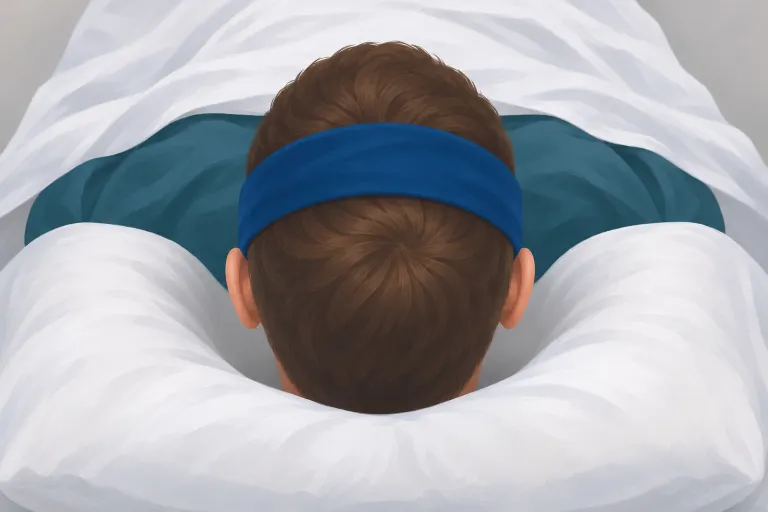
Cleveland Clinic advises sleeping on your back, avoiding pressure on the ears and wearing clothing that doesn't pull over your head. Ask how to manage your usual sleeping position while following those instructions.
What to settle before your Thailand trip
Before booking return travel, confirm the dressing review and follow-up appointments with your treating team. The NHS advice on surgery abroad recommends not flying for 7 to 10 days after facial cosmetic procedures or tummy tucks. Ask your treating team how that advice applies to your operation and proposed flight date, and who will handle concerns after you return home.
Washing, work, swimming and exercise after otoplasty
The NHS says to keep the head bandage clean and dry and wait until it is removed before washing your hair. The British Association of Aesthetic Plastic Surgeons (BAAPS) ties hair washing to dressing and stitch removal and says to keep the grooves behind the ears clean.
Ask for separate instructions for showering, hair washing and getting the ear wound wet. If your stitches dissolve, ask which follow-up milestone determines when you can wash.
When can I return to work or school?
Cleveland Clinic says most people recover at home for about a week before returning. It also says children should limit recess, sports and gym activity after they return to school.
The agency CosMediTour publishes different work schedules in two places. Its FAQ says some clients return at 48 hours and most choose 7 days, while its otoplasty guide gives 1 to 2 weeks for work or school.
Those are the agency's statements. Give your surgeon a description of your work and ask when you can resume it, including any lifting, headwear or physical contact the job involves.
When can I swim or play sport?
The NHS gives 4 to 6 weeks before swimming and around 8 weeks before contact sports. Ask the surgeon which activities count as contact sports for your recovery plan.
CosMediTour's guide says light exercise after 3 weeks and no swimming, contact sports or strenuous exercise for 6 weeks. Its FAQ also gives 3 weeks for light exercise but leaves the other activities to the surgeon's advice.
ASPS says patients should obtain individual instructions about normal activity and exercise. Ask for the permitted activity at each stage instead of applying a work-return date to sport.
Otoplasty risks and signs to raise with your surgical team
The NHS lists tenderness, numbness or tingling for several weeks and slight bruising for about 2 weeks as recovery effects. ASPS also describes discomfort and itching under the bandages.

Cleveland Clinic lists infected ear cartilage and a hematoma, meaning a collection of blood, among the risks. It also lists scarring, asymmetry and numbness that is usually temporary.
The NHS lists cartilage inflammation and excessive bleeding. Its other risks include wound infection and an allergic reaction to anesthesia. It also lists ears becoming uneven or protruding again.
BAAPS describes dressing-related skin breakdown, thick red scars and failure of the repair that may need adjustment.
Ask the surgeon which changes in pain, swelling, bleeding or the wound need an immediate call. Ask where to be assessed if the hospital team can't be reached, and get the same instructions for after you return home.
Planning recovery in Thailand before you book
For otoplasty in Bangkok, Bangkok Hospital prints a follow-up at about 1 week and stitch removal in 1 to 2 weeks. It says to cover the wound for about 2 to 3 days, then attend the scheduled surgeon visit.
Kamol Cosmetic Hospital's procedure page says: "Stitches are usually removed or dissolve in about a week." Ask whether your plan uses dissolving stitches and whether you still need a review before departure.
Ask for the follow-up appointment before buying flights
Kamol's recovery itinerary puts otoplasty within a facial-surgery group and prints a minimum total stay of 10 to 14 days. For that group it lists daily wound dressing, stitch removal at 5 to 10 days and surgeon follow-up at 10 to 14 days.
The marketplace Bookimed gives a Thailand stay of at least 7 to 10 days and says to avoid flying for 24 hours. These are marketplace travel statements; Kamol's separate figure is a grouped hospital itinerary.
Ask your treating surgeon to give the departure plan in writing, including whether the proposed flight falls after the required reviews.
Before booking, ask:
- When will you review or remove my dressing?
- Will any stitches need removal, and who will do it?
- What follow-up must happen before I leave Thailand?
- What is your advice for my proposed flight date?
- Who handles concerns after I return home, and how do I contact them?
Make the recovery plan match the procedure and anesthetic
Phuket Plastic Surgery Institute prints "GA 1 Nights | LA 0 Nights" under hospital admission. GA means general anesthesia and LA means local anesthesia, so its printed admission count changes with the anesthetic.
The NHS says same-day discharge is usual with local anesthesia. Ask the hospital to specify your admission, hotel stay and appointment dates separately.
Results, scars and the possibility of revision
ASPS describes visible results soon after the supporting dressings are removed. Cleveland Clinic says visual improvement is likely in 2 to 3 weeks while recovery can take up to 8 weeks.
The NHS lists stiff ears among possible complications and says they can take several months to become flexible again. Ask when your surgeon wants to assess the result and which changes during healing should prompt an earlier appointment.
AAFPRS describes a thin scar behind the ear after healing and lists recurrence as a risk. BAAPS says a failed repair may need adjustment; discuss how any later assessment or further surgery would be arranged.
Frequently asked questions
How long does otoplasty recovery take?
Cleveland Clinic gives up to 8 weeks, with visual improvement probably apparent in 2 to 3 weeks. Its first dressing-removal visit is likely at about 1 week.
How long do I need to wear an otoplasty headband?
AAFPRS says a headband may be recommended for 2 weeks, while the NHS says patients may need one at night for several weeks. In an ASPS interview, surgeon Joseph Mele says most plastic surgeons require a complete head wrap for at least a week after surgery and a headband at night for at least three months after surgery. Follow your operating surgeon's schedule and ask the team to confirm the fit and when to stop wearing it.
When can I return to work after ear pinning surgery?
Cleveland Clinic says most people spend about a week recovering at home. CosMediTour's agency FAQ reports some clients returning at 48 hours and most choosing 7 days, while its guide gives 1 to 2 weeks.
Ask your surgeon for a return date based on your planned operation and job duties.
When can I wash my hair or swim after otoplasty?
The NHS says to wait until the bandage comes off before washing your hair. It gives a separate interval of 4 to 6 weeks before swimming.
What are the main otoplasty risks?
Cleveland Clinic lists blood collection, infected ear cartilage, asymmetry, numbness and scarring. The NHS also lists recurrence, excessive bleeding and anesthetic reaction; ask which symptoms need prompt assessment rather than assuming they are normal recovery effects.
How long should I stay in Thailand after otoplasty?
Kamol prints 10 to 14 days for a facial-surgery group that includes otoplasty. Bookimed gives at least 7 to 10 days as marketplace advice.
Ask the operating surgeon to confirm your required appointments and proposed departure date before buying flights. Keep the hospital nights and total Thailand stay separate in that plan.
Read next
- Incisionless otoplasty: how it compares with standard ear pinningWhat incisionless or stitch otoplasty does, who it suits and who needs the standard operation, the recovery and risks, and what Thai hospitals print.
- Otoplasty risks and what can go wrong after ear pinningThe risks of otoplasty, warning signs during recovery, revision questions and how to plan follow-up when surgery is in Thailand.
- Otoplasty cost: Thailand beside the US, UK and AustraliaWhat Thai hospitals print for ear surgery (otoplasty), what US, UK and Australian sources give, and what each price covers.
Ask the Hospital When the Dressing Comes Off Before You Fly
Tell us the procedure, your budget and your dates, and any hospitals you are considering.
Get My Free Quote →Free, no obligation. Nothing goes to a clinic without your OK.