Hair Transplant Success Rate: What Can You Realistically Expect?
Part of our comprehensive hair transplant guide, this page explains what determines success rates and what to realistically expect. When patients ask "Do hair transplants work?", they're really asking three questions: Will the transplanted hair grow? Will it look natural? Will I be satisfied with the result?
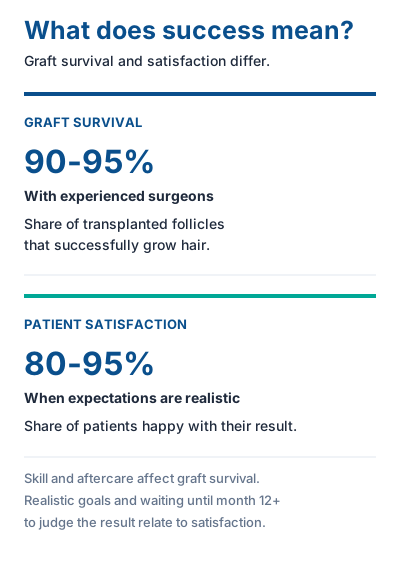
The short answers: Yes (90-95% of grafts survive), yes (if done well), and mostly yes (80-95% patient satisfaction rates). But success depends on multiple factors, and understanding what "success" actually means prevents disappointment.
Defining Success: Graft Survival vs. Patient Satisfaction
Graft survival rate: Percentage of transplanted follicles that successfully grow hair
Patient satisfaction rate: Percentage of patients happy with their result
These aren't the same thing. You can have 95% graft survival but 70% satisfaction if expectations weren't realistic.
Graft Survival Rates by Technique
Where these numbers come from. The ranges below are the figures surgeons and clinics commonly report, not results measured in a published trial. We have not found a peer-reviewed study that establishes a survival rate for any of these techniques across a defined patient group, and any clinic quoting you a single precise number should be asked which study it comes from. Treat these as the industry's working expectations and judge a specific surgeon on their own documented results instead.
FUE (Follicular Unit Extraction)
- Commonly reported range: 90-95%
- Experienced surgeon: 92-96%
- Inexperienced surgeon: 75-90%
Variables affecting FUE survival:
- Transection rate during extraction (follicles cut/damaged)
- Time grafts spend outside body
- Preservation solution quality
- Implantation technique
- Patient aftercare compliance
DHI (Direct Hair Implantation)
- Commonly reported range: 92-97%
- Why higher: Reduced ischemia time (grafts spend less time outside body)
DHI advantages:
- Grafts placed immediately after extraction
- Less mechanical handling trauma
- Implanter Pen controls depth precisely
FUT (Follicular Unit Transplantation / Strip Method)
- Commonly reported range: 90-95%
- Why competitive: Grafts dissected under microscope (lower transection)
FUT advantages:
- Less follicle damage during extraction
- Controlled dissection environment
- Grafts remain in tissue longer before separation
The reality: With a skilled surgeon, all three techniques achieve 90-95% survival. Surgeon skill matters more than technique choice.
What Affects Graft Survival?
Surgeon Skill and Experience
Most critical factor. A skilled surgeon doing FUE beats an inexperienced surgeon doing DHI.
Surgeon variables:
- Extraction precision (avoiding transection)
- Graft handling technique
- Implantation depth and angle accuracy
- Speed (faster = less ischemia time)
- Artistic eye (natural hairline design)
How to assess surgeon skill:
- ABHRS or ISHRS certification
- 500+ procedures performed
- Before/after photos showing month 12 results (not just best cases)
- Patient reviews on independent platforms
Graft Handling and Storage
Ischemia time: Period grafts spend without blood supply
Target: Under 4 hours from extraction to implantation
Longer ischemia = lower survival:
- 0-2 hours: 95-98% survival
- 2-4 hours: 90-95% survival
- 4-6 hours: 85-92% survival
- 6+ hours: 70-85% survival
Preservation solutions:
- HypoThermosol (best): Maintains grafts up to 6 hours
- Saline (acceptable): 2-4 hours
- Plasma-lyte: 4-6 hours
Temperature: Grafts kept at 2-8°C (cold but not frozen)
Graft Quality
Ideal graft:
- Intact follicle (no transection)
- Minimal surrounding tissue trauma
- Protected from desiccation (drying out)
Transection rate (cutting follicles during extraction):
- Expert surgeon: 2-8%
- Average surgeon: 8-15%
- Poor technique: 20-40%
Curly/coarse hair: Higher transection risk (follicles curve beneath surface)
Patient Factors
Positive factors (improve survival):
- Non-smoker
- Good general health
- Normal blood pressure
- Adequate scalp blood supply
- Following aftercare instructions
Negative factors (reduce survival):
- Smoking (reduces blood flow by 30-40%)
- Diabetes (poor wound healing)
- Autoimmune conditions (graft rejection risk)
- Poor aftercare compliance
- Infections
Smoking impact:
Studies show 15-20% lower graft survival in smokers. Quit 4+ weeks before and after surgery.Success Rates by Patient Type
Young Patients (Under 30)
Challenge: Hair loss pattern still developing
Risk: Transplanted area looks good initially, but native hair continues receding, creating "island" effect
Success rate: 90%+ graft survival, but 30-40% require revision procedures as pattern develops
Best practice: Wait until 25+ unless stable for 3+ years
Middle-Aged Patients (30-50)
Ideal candidates:
- Pattern mostly established
- Donor area robust
- Healing optimal
Success rate: 90-95% graft survival, 85-95% patient satisfaction
This is the sweet spot for hair transplants.
Older Patients (50+)
Advantages:
- Pattern fully established (easier planning)
- Lower density expectations (age-appropriate)
Challenges:
- Thinner donor hair
- Slower healing
- Lower graft density possible
Success rate: 85-92% graft survival, 80-90% patient satisfaction
Patients 70+: Still possible with realistic expectations
Women
Success depends on cause of hair loss:
Good candidates (high success):
- Traction alopecia (85-95% satisfaction)
- Hairline lowering (90-95% satisfaction)
- Scarring alopecia (80-90% satisfaction)
Poor candidates (low success):
- Diffuse thinning without stable donor (50-70% satisfaction)
- Hormonal hair loss (underlying cause not addressed)
Key: Women need thorough diagnosis before proceeding
Realistic Expectations by Norwood Level
Norwood 2-3 (Mild Recession)
- Grafts needed: 1,500-2,000
- Expected result: Full, natural hairline restoration
- Satisfaction rate: 90-95%
- Caveat: May need touch-up if loss progresses
Norwood 4 (Significant Recession)
- Grafts needed: 2,500-3,000
- Expected result: Natural frontal restoration, may defer crown
- Satisfaction rate: 85-92%
Norwood 5-6 (Extensive Baldness)
- Grafts needed: 4,000-5,500
- Expected result: Frame the face, moderate density (not teenage fullness)
- Satisfaction rate: 75-85%
- Reality check: Cannot achieve full coverage; prioritize hairline
Norwood 7 (Maximum Baldness)
- Grafts needed: 5,000-7,000+
- Expected result: Defined hairline, sparse mid-scalp, thin crown
- Satisfaction rate: 70-80%
- Critical: Manage expectations aggressively
The pattern: Success rates drop as extent of baldness increases (not because grafts fail, but because expectations exceed what's achievable)
Patient Satisfaction Rates
Overall satisfaction, as commonly reported in industry surveys rather than a single cited dataset:
- Very satisfied: 65-70%
- Satisfied: 20-25%
- Neutral: 5-8%
- Dissatisfied: 5-8%
What correlates with satisfaction:
Positive:
- Realistic expectations (set by surgeon pre-op)
- Experienced surgeon chosen
- Following aftercare instructions
- Waiting until month 12+ to judge
Negative:
- Unrealistic expectations ("I want teenage hairline density")
- Choosing cheapest option without research
- Poor aftercare compliance
- Judging result too early (month 3-6)
Most common dissatisfaction causes:
- Chose surgeon based on price, got poor execution
- Expected more density than donor supply allowed
- Native hair continued thinning (didn't use finasteride)
- Judged result before month 12
Factors That Improve Success
1. Choose Surgeon Based on Skill, Not Price
Success correlation:
- ABHRS-certified surgeon: 90-95% satisfaction
- Non-certified but experienced: 80-90% satisfaction
- Inexperienced/budget surgeon: 60-80% satisfaction
The math: Paying more for a qualified surgeon vs. 40% chance of needing corrective surgery ($$$) from cheap surgeon.
2. Follow Aftercare Religiously
Compliance impact on graft survival:
- Excellent compliance: 92-96%
- Moderate compliance: 88-93%
- Poor compliance: 75-88%
Critical aftercare elements:
- Prescribed medications (full course)
- Gentle washing technique
- No smoking
- Sun protection
- Avoiding trauma to grafts
3. Use Finasteride for Native Hair
The transplant paradox:
- Transplanted hair is permanent (DHT-resistant)
- Native hair continues thinning without treatment
Result without finasteride:
- Transplanted hairline looks great
- Native hair behind it thins
- Creates unnatural, patchy appearance
Patient satisfaction:
- With finasteride: 85-95%
- Without finasteride: 65-80%
4. Realistic Density Goals
Natural scalp: 60-100 FU/cm²
Achievable transplant density: 30-50 FU/cm²
The visual reality: 35-40 FU/cm² looks completely natural and full to the eye
Patients who accept this: 90%+ satisfaction
Patients who demand 60+ FU/cm²: Often disappointed (it's not achievable)
When Transplants Don't Work
Graft survival below 60% is considered failure. This happens in ~2-5% of cases.
Causes:
- Severe infection during healing
- Surgeon inexperience (excessive transection)
- Patient health issues (uncontrolled diabetes, autoimmune)
- Smoking during recovery
- Trauma to grafts during healing
What happens:
- Some grafts grow, most don't
- Patchy, sparse result
- Requires corrective transplant
Options:
- Wait 12 months, reassess
- Corrective transplant with different surgeon
- Accept result, use scalp micropigmentation for density illusion
Corrective Transplants
Success rates for repair work:
- Fixing poor hairline design: 85-90% satisfaction
- Adding density after adequate initial transplant: 80-90% satisfaction
- Repairing badly depleted donor: 60-75% satisfaction (challenging)
Key: Find a surgeon specializing in corrective work (different skill set)
Long-Term Success (5-10+ Years)
Do transplanted hairs stay permanent?
Yes. The follicles are DHT-resistant genetically. They keep that property forever.
Long-term data:
- 10-year studies: 85-92% of grafts still present and growing
- Hair may thin slightly (2-3 hairs per graft become 2 hairs)
- Natural aging affects caliber (all hair thins with age)
What changes over time:
- Native hair continues receding (if not on finasteride)
- Hairline may need revision if pattern progresses
- Some patients get second procedure for added density
Maximizing Your Success
Pre-op:
- Choose ABHRS/ISHRS certified surgeon
- Verify credentials independently
- Review actual patient results (month 12+)
- Set realistic expectations
- Quit smoking 4+ weeks before
Post-op:
- Follow aftercare instructions exactly
- Take all prescribed medications
- Protect grafts from trauma
- Attend all follow-ups
- Start/continue finasteride (if prescribed)
- Wait until month 12+ to judge
Long-term:
- Continue finasteride to protect native hair
- Maintain healthy lifestyle
- Protect scalp from sun
- See surgeon if concerned about graft survival
Conclusion
Hair transplants have a 90-95% graft survival rate with experienced surgeons. Patient satisfaction rates are 80-95% when expectations are realistic. The keys to success: qualified surgeon, proper technique, good aftercare, realistic goals, and patience to wait for final results.
Success is not just graft survival. It's achieving a result that looks natural and meets your (realistic) expectations.
Next steps:
- Assess your candidacy: How Many Grafts Do I Need?
- Understand the investment: Is a Hair Transplant Worth It?
- Return to complete guide: Hair Transplant Guide
Frequently Asked Questions
What is the success rate of hair transplants?
Hair transplant graft survival rates are 90-95% with experienced surgeons across all techniques. FUE averages 90-95% (92-96% with experienced surgeons), DHI averages 92-97% due to reduced time grafts spend outside the body, and FUT averages 90-95% with lower transection from microscope dissection. With a skilled surgeon, all three techniques achieve similar survival rates - surgeon skill matters more than technique choice.
What factors affect hair transplant success?
Surgeon skill is the most critical factor - extraction precision, graft handling, implantation accuracy, and speed all matter. Graft handling affects survival: grafts kept under 4 hours from extraction to implantation have 90-95% survival, while 6+ hours drops to 70-85%. Patient aftercare is crucial - following washing instructions, avoiding trauma to grafts, and taking medications as prescribed. Hair characteristics also matter: coarse hair provides better coverage than fine hair, and low color-contrast (blonde/fair skin or dark hair/dark skin) creates better cosmetic results than high contrast.
What are realistic expectations by hair loss level?
Realistic expectations vary by Norwood level: Norwood 2-3 can achieve near-complete restoration with excellent cosmetic results; Norwood 4-5 achieves very good improvement with natural-looking density; Norwood 6-7 achieves modest improvement (hairline frame, sparse mid-scalp coverage) and often requires 2-3 procedures. Advanced hair loss cannot be fully restored to teenage density due to limited donor supply - the goal is strategic coverage prioritizing the hairline and frontal areas.
Do hair transplant results last long-term?
Transplanted hair is permanent because it comes from the DHT-resistant donor zone and retains this resistance in its new location. However, native (non-transplanted) hair continues thinning due to ongoing male pattern baldness, which is why finasteride maintenance is crucial. Without finasteride, you may need additional procedures to fill in thinning areas around the transplant. With proper maintenance, results last a lifetime.