Long Hair Transplant: What No-Shave FUE Actually Involves
Part of our hair transplant guide. Right after their procedure, scalp still numb, one patient spent a few hours walking around a shopping mall. They had just had 1,950 grafts, small units of hair moved during the transplant, at a Bangkok clinic, and in their words, "no one could even tell I'd had the procedure." They wrote it up on a hair restoration forum, posted 11 July 2026 and read 25 September 2026. That is the promise behind a long hair transplant, and for them it held up.
It doesn't always. Another patient, 1,275 grafts in, could pass for having a bad haircut on vacation within a week, but could not wear their hair the usual way at the office for about five weeks, then spent another five to eight weeks with visible thinning at the front from shock loss, temporary shedding after the procedure (hair restoration forum, posted 2 June 2023). Same category of procedure. Very different outcome.
This page covers what a long hair transplant actually is, who it works for, what Thai clinics print for it, and where the marketing gets ahead of the evidence.
What Is a Long Hair Transplant?
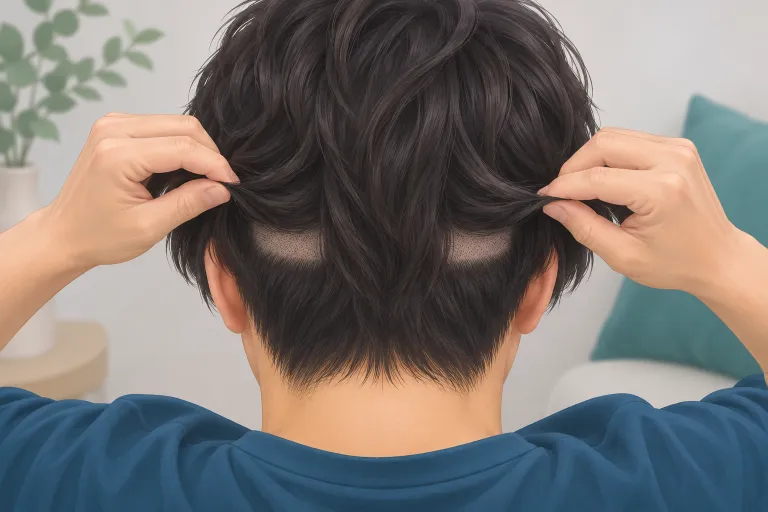
A long hair transplant, usually called no-shave FUE by the people who've actually had one, is a version of follicular unit extraction where the surgeon doesn't shave your whole scalp down to skin. Instead, small sections of the donor area get shaved in small patches, and the surrounding long hair covers the shaved parts while grafts are taken and placed. You walk out with hair that still looks like hair, not a buzzed scalp.
"No-shave" isn't a fully accurate name, and at least one surgeon has said so publicly. The surgeon's point is that small sections still get shaved, they're just hidden, and if you cut your hair short afterward the shaved patches can show through in a patchy, moth-eaten pattern. Both things can be true: hair does get shaved, and it's genuinely well hidden if the surgeon does it carefully.
You'll see this procedure marketed under a handful of names that all mean roughly the same thing: long hair FUE, unshaven FUE, shaveless FUE, or a FUE hair transplant with the donor hair left long. Clinics also sell it under branded names. Alvi Armani sells it as "Executive Buzz™ No Shave FUE Hair Transplant" (its site, read 8 November 2026), and Dr. Parsa Mohebi's clinic used "Celebrity FUE" in a press release dated 27 March 2014 and prints "Celebrity Hair Transplant™" with a trademark symbol (his site, read 8 November 2026). Those names are branding, not a different procedure, so don't assume one clinic's version is technically different from another's just because the name is different.
How Long Hair FUE Differs From Standard (Shaved) FUE
A standard FUE hair transplant shaves the entire donor area first. That makes it faster and easier for the surgical team to see and extract individual follicles, and it is the common case: the ISHRS says "In most cases, FUE is performed with a shaved donor area" (ISHRS, read 21 September 2026). No-shave FUE skips that step, or limits it to small hidden sections, which means the surgeon is working around long hair the whole time. It's slower and technically harder.
Patients argue about which one to pick, and there's no consensus. The case for shaving: pulling grafts from unshaven hair carries a real risk of transecting (cutting through) hairs you didn't mean to touch, in both the donor and recipient areas, and you only get one shot at this. The case against full shaving usually comes down to one thing: you don't want to walk into work with a buzzed head while it grows back. One patient with a Norwood 2.5 to 3 pattern wrote in January 2020 that they had "just the back shaved and implanted in the front", and that the donor area was back to normal after 10 days. That's one patient's account, not clinical guidance, so treat it as a data point rather than a rule.
A more experienced voice on one of the bigger patient forums reframes the whole decision: the priority is making the job as easy as possible for the surgeon and the technicians, because an easier extraction usually means a better outcome, not chasing the surgeon who's best specifically at no-shave work.
Will People Be Able to Tell You Had a Transplant?
This is the actual question behind the search. It depends, and the deciding factors are distance, graft count, and how good your surgeon is specifically at this technique.
The Bangkok forum poster from the intro is the best-case version. Their post says the hairline looked more defined and denser right after, not less natural, and they went from the clinic straight to a shopping mall. That is one patient writing about their own result, so weigh it that way.
The other patient from the intro is the realistic downside. Their account, in their own words on a hair restoration forum: discreet enough for a hat-free day out within a week, not office-ready for about five weeks, then another five to eight weeks of visible thinning from shock loss before things settled. They said afterward that no-shave should only be attempted with a surgeon who has a real reputation for it, and that their own choice didn't meet that bar.
And there's a blunt counterpoint worth including because it's the sharpest objection to the whole pitch: one forum user argued that in any face-to-face conversation, someone's going to notice the small red dots across your scalp regardless of hair length. No account we found answers that directly, so if close conversations in the first days matter to you, ask your clinic how visible the recipient area will be.
So the range is real but bounded. In the accounts above, the biggest variable is the surgeon doing it.
Who Is a Good Candidate for Long Hair FUE?
The standard answer is that you need enough existing length for the surrounding hair to hide the shaved sections, and you need a surgeon experienced specifically with this technique, not just FUE generally. One person researching the procedure found a surgeon, a member of the International Society of Hair Restoration Surgery, who said they could do FUE "by only shaving the scruff". Membership of that society is not the same as board certification. The ISHRS's own page on medical boards describes the American Board of Hair Restoration Surgery as "the only board certification unique to hair restoration surgery" (ISHRS on medical boards, read 21 September 2026). Other clinics they asked said they would need to shave their hair. The technique and the amount of shaving both vary by surgeon, not just by how long your hair already is.
A few groups genuinely aren't addressed anywhere in the material we could find, and it's worth saying so plainly rather than pretending the answer exists:
- Female patients. Women ask about this procedure too, and the research we reviewed had real questions but no dedicated, sourced answer specific to female candidacy.
- Transgender patients on hormone therapy who don't want to cut their hair short. It came up in two threads on a transgender surgery forum on Reddit, and no sourced clinical answer turned up.
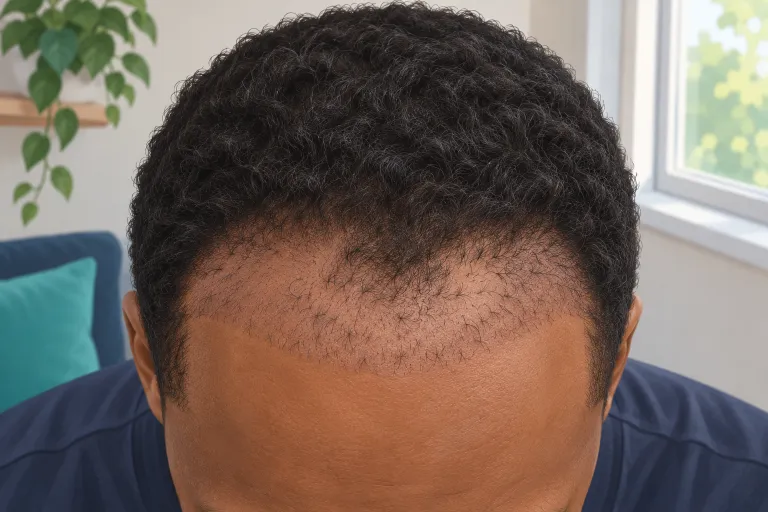
- Curly or coily (Afro-textured) hair. A commenter asked directly whether the technique works the same way on textured hair. Not one of the videos or competitor pages we reviewed addressed it. This is a genuine open question, not something we're going to guess at.
One more sequencing question worth raising before you book anything: should you try finasteride or dutasteride first, to see if medication alone slows things down, before committing to surgery? It's a fair question and a common one. Nobody in the material we reviewed answered it, which means it's a conversation for a consultation, not something to decide from a guide.
Minimum Hair Length Needed
We couldn't find a published minimum length you can rely on across clinics. What one surgeon considers workable, another will reject outright, which is exactly the confusion the ISHRS-member surgeon story above illustrates. Ask any clinic you're considering for their specific minimum before you assume you qualify.
Have Your Hair Loss Diagnosed Before Booking
Have the cause of your hair loss checked before booking a long hair transplant. The American Academy of Dermatology (AAD) says effective treatment starts with finding the cause.
The AAD describes an assessment that asks how long you have been losing hair and whether it began suddenly. Before your appointment, write down when you first noticed thinning and how it has changed.
If the doctor suspects an illness, vitamin deficiency, hormone imbalance or infection, the AAD says blood tests or further scalp tests may be needed. Ask which tests your own symptoms call for before paying for a package of tests.
For surgery, the AAD lists two requirements: enough healthy scalp hair to move, and the ability to grow hair in the thinning area. Ask the surgeon to assess both before discussing how much hair to leave unshaven.
Use the consultation to get answers specific to your scalp:
- What is causing my hair loss, and what findings support that diagnosis?
- Is there enough healthy donor hair for the area I want covered?
- Do I need further assessment or treatment before deciding about surgery?
Advantages of Long Hair FUE
The reason patients choose this over standard FUE almost never comes down to vanity. It's their job. Across the research, this was the single most repeated motivation, ahead of everything else: people who cannot show up to work with a shaved head while it grows out, and don't want colleagues asking questions. One forum poster planning the procedure put it plainly: they didn't need the no-shave option, they preferred it because it made scheduling a lot easier. Another said the idea of a shaved head was the thing stopping them from booking a procedure at all.
If you do end up with a small undershaved section, expect an awkward growing-out phase. One person weighing the procedure hoped it could be covered with a scarf, a bandana or a headband until it grew out. How long that phase lasts is not something we found a reliable figure for, so ask your clinic what to expect at your hair length.
The Real Downsides and Limitations
Transection and patchiness risk. Forum posters argue that working around unshaven hair makes it harder to see and extract follicles cleanly, which they say raises the risk of damaging hairs you weren't trying to touch, in both the donor and recipient areas. We found no source that compares how many grafts a surgeon can move in one session with and without shaving.
It can cost more for a worse result if the surgeon isn't skilled at it specifically. One Reddit poster who had a branded no-shave procedure called it "absolutely not worth it", writing that you "pay much more money for a longer procedure" that gives fewer grafts and "an inferior outcome" (r/HairTransplants, posted February 2024, read 25 September 2026).
Net density loss is possible. The patient from the "will people notice" section above ended up with visibly less density than before the procedure, which they put down to choosing a surgeon who "did not fit the bill" for no-shave work.
Shock loss and the shedding timeline are genuinely disputed. We found no week count for shock loss and shedding with the no-shave version. If you want a specific one, ask your surgeon.
Cost, unresolved. One Reddit poster was quoted $10 per graft for 2,000 grafts of no-shave FUE at a clinic in Seattle, in the US, and called it steep (r/HairTransplants, posted December 2023, read 25 September 2026). That's one person's report of one quote from a US clinic. It isn't a market rate, and we're not treating it as one. More on pricing below.
How Long Hair FUE Is Performed, Step by Step
There is no single correct running order, and the International Society of Hair Restoration Surgery says so itself. Its own FUE page warns that describing the procedure in detail "may mislead the reader into thinking that what is described are actually universal steps recommended for all surgeons, and that is simply not the case", because the procedure "varies from surgeon to surgeon in terms of setup, execution, sequence, instrumentation, staffing, anesthesia". It gives harvesting order as a live example: "some surgeons prefer to harvest the grafts first, and then make recipient sites."
What the society does commit to is that "the fundamental components of the procedure remain the same": outlining the donor and recipient areas, numbing the scalp, making the recipient sites, harvesting the grafts, and placing them (ISHRS, read 21 September 2026). It also gives the tool size, micro punches of 0.7 to 1.2mm. Treat the list as the components, not the order, and ask your own surgeon which sequence they use.
What changes in the long hair version is one step, and the ISHRS describes that too: in a partial shave "the hair is lifted up, a zone of scalp is shaved for FUE harvesting, and then the hair is let down to hide the shaved area" (ISHRS on shaven and un-shaven terminology, published 26 June 2024, last updated 21 May 2026, read 21 September 2026). The same page confirms the donor area "can be fully shaved, partially shaved, or left unshaven", which is the plainest statement anywhere that these are three settings of one procedure rather than three procedures.
The difference from standard FUE is time and precision, not a different operation. Every step that involves seeing and handling follicles takes longer with long hair in the way.
Expect an early shed, when the transplanted hair itself falls out. The ISHRS ties it to the scabs clearing, "usually 1 to 2 weeks later". It comes early. This trips people up if nobody warns them, because it looks like the procedure failed. It didn't. The follicle stays under the skin. On how long regrowth takes, the ISHRS says only that it takes "several months at a minimum, as hairs grow about 1 cm per month, and oftentimes a year or more for the full result to appear" (ISHRS, read 21 September 2026). We are not going to put a tighter number on it than the profession does. This is normal for hair transplants generally, not specific to the no-shave version.
Manual vs. Robotic Technique
Some clinics use assisted extraction devices built specifically for non-shaven work, rather than doing every extraction by hand. Whether a given clinic uses manual technique, a device, or both isn't something we can answer in general terms, because it varies clinic to clinic and isn't always disclosed upfront. Ask directly which method your surgeon uses and why, before you book.
Graft Count and What It Means for Your Results
Numbers help more than an "it depends" answer, so here's what real patients actually reported, each attributed to their own case rather than blended into an average:
| Grafts | Outcome reported |
|---|---|
| 1,950 | Positive. Bangkok patient, discreet within hours. |
| 1,275 | Negative. Office-ready only after five weeks, net density loss. |
| 2,000 | Quoted $10/graft at a Seattle clinic (Dec 2023); poster called it steep. |
One clinic's own doctor, answering on RealSelf, stated their own facility's capacity for non-shaving FUE goes up to 2,500 to 3,000 grafts. That's one clinic's stated limit, not a universal ceiling. Ask any clinic you're evaluating what their own maximum actually is.
Can Hair Loss Continue After a Long Hair Transplant?
Yes. The NHS warns that hair around a transplant may keep thinning. For long-term planning, ask about the hair that will stay in place as well as the grafts being moved.
The NHS says the surgeon should plan the design with later thinning in mind. Ask the surgeon to show you the proposed hairline and explain how the overall coverage could look if more surrounding hair is lost.
The AAD says a dermatologist may recommend hair loss medicine after a transplant. It says medicine can prevent or slow further loss and thinning. Discuss whether ongoing treatment suits you with your own doctor, including what to expect if you decide against it.
The International Society of Hair Restoration Surgery (ISHRS) says progressive hair loss may lead to further procedures. It also warns that there may eventually be too little donor hair for more transplantation.
Before agreeing to the graft count, ask how the surgeon is planning for that possibility:
- How much donor hair would remain available if I needed another procedure?
- If I lose more hair, which areas could you realistically cover, and which might remain thin?
Ask for that plan alongside the initial quote so you can weigh future treatment needs before committing to the first operation.
Choosing a Surgeon or Clinic for Long Hair FUE
Look for a surgeon with a track record in this technique specifically, not just in FUE. The patient with the negative outcome above put it most directly: no-shave "should only be done with docs that have a great reputation for doing so (if at all), and the one I chose did not fit the bill there" (hair restoration forum, posted 2 June 2023, read 25 September 2026). Not everyone weighs it that way: the more experienced forum voice mentioned earlier would rather you make the surgeon's job easier than chase a no-shave specialist.
One clear warning surfaced twice on the same forum thread: be wary of YouTubers and celebrity content creators as a research source. One poster wrote that they "water down information and avoid taking hard stances when needed".
Verifying Credentials When Researching From Abroad
The Bangkok patient from the intro found their surgeon through TikTok and Instagram, then found "there wasn't a lot of information or many detailed reviews available in English. That made me a little hesitant at first." An online consultation, in their words, "gave me that confidence." That gap is the reason to be extra careful verifying credentials when you're researching a surgeon in another country. Confirm board certification independently, ask for before-and-after cases specific to no-shave work (not just standard FUE), and don't rely on a clinic's own testimonials as your only source. If you want a personalized clinic recommendation, contact us.
Long Hair Transplant Cost
Three Thai clinics publish a price for this kind of procedure. HairTran prints $3.47 (฿115) per graft and says the fee covers assessment, the procedure and up to one year of aftercare, with a low-level laser therapy program. Hairsmith prints $3.62 (฿120) per graft with no hidden fees (both read 7 November 2026). CosmoPrime's Thai long hair page gives an approximate start of about $2,710 (฿89,900) for a long hair transplant, against about $1,810 (฿59,900) for a regular hair transplant, and says price and duration depend on the number of grafts and the doctor's assessment (read 7 November 2026, our translation from Thai). Dollars at ฿33.14 = $1 (European Central Bank reference rates, 22 September 2026).
What drives the price up compared to standard FUE: the ISHRS says non-shaved FUE "requires much more labor and time and is usually charged at a higher price" (read 7 November 2026). Beyond that, pricing depends on your grafts, your surgeon, and your clinic, which is exactly why a real quote beats any number on this page.
Recovery and Aftercare
Two real accounts, kept separate rather than averaged into a single timeline, so you can see the real range between a good recovery and a hard one.
A straightforward recovery: pain rated 4 out of 10 the evening of the procedure, down to 2 out of 10 the next morning, managed with over-the-counter pain relief only. Some itching on day three, treated with an antihistamine. Out at a shopping mall straight after the procedure.
A harder recovery: presentable enough for casual wear within a week, but not comfortable in a professional setting for about five weeks, followed by five to eight more weeks of visible thinning as shock loss ran its course before new growth caught up.
Once the scabs clear, around one to two weeks in, expect the early shed described above. It's normal. For regrowth the ISHRS gives "several months at a minimum" and "oftentimes a year or more for the full result". Don't treat any single week count as guaranteed.
Traveling Abroad for the Procedure
If you're flying in for this, the Bangkok patient's account is the most directly relevant first-hand story we found, because they went through the exact situation international patients face: struggling to find detailed, honest reviews in English before deciding where to go. That gap is the reason a page like this one exists.
We don't yet have sourced, first-hand detail on flight timing around the procedure or what follow-up care looks like once you're back home, and we're not going to invent it. The plain advice, which is ours rather than anyone's published protocol, is to build in a few extra recovery days before flying home rather than cutting it close, and ask your clinic directly what follow-up looks like once you've left the country, since in-person check-ins usually aren't possible from abroad.
Frequently Asked Questions
Is no-shave FUE as good as standard shaven FUE? Same result? See the comparison section above. We found no source that directly compares the two outcomes, so we won't claim they match. Most of the direct voices we found lean the other way. One called it "No benefit to doing it", another an inferior outcome, and a third, posting as StillAlive, wrote that "you are essentially limiting your chances of success by complicating simple steps" (hairrestorationnetwork.com, thread dated 2022, read 21 September 2026). The technique is harder to execute well, so surgeon skill matters more here than it does with standard FUE.
How long do the results last? We don't have a sourced answer specific to no-shave FUE's longevity versus standard FUE. The ISHRS says an FUE transplant is permanent and that grafts placed by an experienced surgeon "should survive in most cases", but that grafts taken from outside the safe donor area "may fail over time", and grafts taken from hair that was already miniaturizing "would also most likely not survive" (ISHRS, read 25 September 2026). Confirm the specifics with your surgeon.
What's the success rate of no-shave versus shaved FUE? No reliable figure exists in the research behind this page. Anyone quoting you a specific success-rate percentage for no-shave FUE should be able to tell you where that number comes from.
How much does it cost? Thai clinics print ฿115 ($3.47) per graft (HairTran) and ฿120 ($3.62) per graft (Hairsmith) for no-shave FUE, and CosmoPrime gives an approximate start of about ฿89,900 for a long hair transplant. Get a written quote for your own graft count.
Which doctors or clinics actually offer it? Not every clinic does no-shave work well, and this page isn't a directory. If you want a personalized clinic recommendation, contact us.
Is it possible with genuinely long, chest-length hair? This isn't answered anywhere in the sources behind this page. Ask a surgeon directly, since it likely depends on their specific technique and equipment.
How long should my hair be for long hair FUE? There's no single published minimum. It varies by surgeon, as covered in the candidacy section above. Confirm with the specific clinic you're considering.
Is long hair FUE painful? One patient rated it 4 out of 10 the evening of the procedure and 2 out of 10 the next morning, managed with over-the-counter pain relief. That's one patient's experience, not a guarantee of yours.
Can I smoke, exercise, swim, or return to work after the procedure? We don't have a sourced, specific answer for this technique. The ISHRS says policies on return to exercise and water exposure "vary among surgeons, so it is important to follow the instructions given by the surgeon you choose rather than any information found on other websites that you may peruse or visit" (ISHRS, read 21 September 2026). That includes this page. We found no sourced guidance specific to this technique on smoking or on when to return to work. Confirm exact timelines with your surgeon before you book.
Does it work on curly or coily (Afro-textured) hair? This is a genuine open question. Nobody in the material we reviewed, patient or clinical, addressed it directly. Ask a surgeon with documented experience on textured hair specifically.
Should I try finasteride or dutasteride before considering surgery? That's a real, common question with no general answer. It depends on your hair loss pattern and how far along it is. Raise it in a consultation rather than deciding from a guide.
Read next
- Mega session hair transplantHow many grafts clinics say they do in one day, what limits it, the risks and what Bangkok clinics publish.
- PRP after a hair transplantThe studies, Thai clinic prices, timing, patient reports and the exosome claims, before you accept PRP in a quote.
- Stem Cell Hair Restoration: Thai Prices and EvidenceWhat Thai clinics sell as stem cell hair restoration, what the studies show, FDA status, and the prices clinics publish in Bangkok and Phuket.
- Body Hair Transplant: Donor Areas, Results, Thai CostCan a beard or body hair replace a thin scalp donor? What an ISHRS article and patients report on yield, placement and trade-offs, plus a Thai clinic's rate.