Genioplasty vs Chin Implant in Thailand: How the Operations Differ
Sliding genioplasty cuts and repositions your own chin bone, then holds it with plates and screws, allowing horizontal or vertical changes, as described by the American Academy of Facial Plastic and Reconstructive Surgery (AAFPRS). A chin implant adds projection by placing a synthetic implant over the chin bone.
Choosing between them involves more than how far forward you want your chin. StatPearls lists bite and jaw-position conditions that affect implant suitability; ask your surgeon to assess these alongside your health and facial goals.
Clinics cannot pay to be listed or ranked higher on AsiaPatient.
What Is Genioplasty, and What Is a Chin Implant?
The terminology can overlap: the American Society of Plastic Surgeons (ASPS) uses genioplasty and mentoplasty as names for chin surgery, including implant enhancement and bone reduction. When discussing an operation, ask whether the surgeon means an implant or surgery on the bone.
What each operation can change
ASPS describes shaped silicone implants as adding projection, meaning how far the chin extends forward. It also describes reducing a prominent chin through surgery on the bone.
AAFPRS describes sliding genioplasty for significant horizontal and vertical change. Ask the surgeon to identify the direction of the proposed change and explain how it relates to the rest of your face.
Permanence and alternatives
AAFPRS says chin implants are designed to be permanent fixtures without an expiration date, while noting that complications or damage could require removal or replacement. It describes bone modifications as permanent and filler as temporary.
Ask what removal or replacement would involve if you developed a complication or wanted a different change.
How a Chin Implant Is Done
Cleveland Clinic describes an incision inside the mouth or beneath the chin. The surgeon creates a pocket above the chin bone, then inserts the implant.
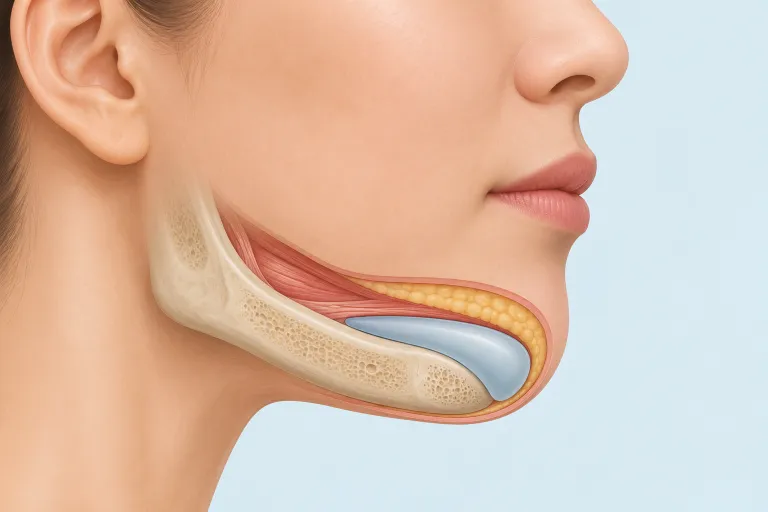
The AAFPRS facial-implant guide says a surgeon may use local anesthesia, which numbs the area, or general anesthesia. Ask which is planned, whether sedation is involved and why the team proposes that approach.
What Thai hospitals print about implant surgery
Yanhee International Hospital describes silicone placed on the chin bone, "usually under local anaesthesia," in about an hour. Its summary also lists local or general anesthesia by technique.
Phuket Plastic Surgery Institute (PPSI) prints "GA 1 Nights" and "LA 0 Nights": one hospital night with general anesthesia, none with local anesthesia. Ask the hospital which arrangement applies to the proposed operation.
Incision, oral care and early recovery details
Cleveland Clinic says pain, swelling and bruising may occur after an implant.
Cleveland Clinic says stitches are removed within about a week, while stitches used inside the mouth dissolve on their own. Confirm which closure your surgeon plans and whether an appointment is needed for removal.
Cleveland Clinic's chin-implant guide says a soft-food diet may be recommended for a few weeks, and that rinsing the mouth with salt water or a prescription dental rinse before and after meals can help keep the incision clean.
How Sliding Genioplasty Is Done
Cambridge University Hospitals, part of the UK National Health Service (NHS), describes general anesthesia, meaning you are asleep. The surgeon opens the gum inside the lower lip, makes a controlled cut through the chin bone, moves it and secures it with titanium plates and screws.
Vejthani International Hospital also describes general anesthesia and an inside-mouth incision. It calls the bone cut an "osteotomy" and describes securing the bone with wires, plates or screws.
What sliding genioplasty can change
AAFPRS lists movement forward, backward, upward or downward. Vejthani describes "forward, backward, or sideways" movement and discusses chin length and asymmetry.
Ask your surgeon to show the planned movement on your assessment. If the proposal includes both repositioning and reduction, ask which part of the bone would move and which part would be removed.
Bite, jaw position, and facial balance in planning
Cleveland Clinic says genioplasty doesn't move the teeth or affect occlusion, meaning how the teeth meet. A consultation should distinguish the chin change you want from any concern about your bite.
StatPearls lists a set-back lower jaw with dental malocclusion, meaning teeth that don't meet correctly, among contraindications to an implant. A contraindication is a reason a treatment may be unsuitable.
The same chapter says malocclusion or a tilted bite plane (occlusal cant) is best managed with jaw-repositioning surgery, which can be accompanied by genioplasty. Ask whether your assessment concerns the chin alone or the position of the jaw as well.
For facial balance, ask how the proposed chin position relates to your lips, nose and jawline. Ask what examination or imaging the surgeon needs before confirming the plan.
Genioplasty vs Chin Implant: Comparing the Operations
Ask which features of your examination support the proposed technique.
| Question | Chin implant | Sliding genioplasty |
|---|---|---|
| What is placed or moved? | An implant goes into a pocket over bone: Cleveland Clinic | Chin bone is cut, moved and fixed: Cambridge |
| What change is described? | Added projection with shaped silicone: ASPS | Advancing, lengthening or setting back the chin: Cleveland Clinic |
| What anesthesia and incision? | Local or general; inside-mouth or under-chin incision: AAFPRS | General anesthesia and an inside-mouth incision: Cambridge |
Ask for the hospital stay and follow-up dates for your exact operation. Use the recovery descriptions below to discuss work and activity separately from discharge.
What Thai Hospitals and Clinics Print About Planning and Follow-Up
Vejthani describes candidates as healthy nonsmokers whose bones have finished growing, with realistic expectations and no underlying jaw disorders. Ask how the surgeon will assess those points in your consultation.
Hospital stay and first review
Yanhee calls an implant a day case, meaning you go home without an overnight stay. For bone advancement, it describes "around two days of monitoring before discharge" and "a follow-up at about day 7."
YOUNIFY Clinic prints approximately 7 days in Bangkok from surgery for a chin implant alone, for stitch removal and the first review before flying. Travel timing varies by case.
Ask for a stay and review schedule specifically for sliding genioplasty if that is your proposed operation. Have the surgeon confirm your departure plan rather than applying an implant schedule yourself.
Questions to have answered in writing
Bring the change you want to discuss, then request a written plan:
For published implant-price details, see chin implant costs in Thailand. Ask for a quote that names the exact operation discussed at your assessment.
Recovery and Aftercare: The Timelines Sources Print
Yanhee prints recovery of 1 to 2 weeks for an implant and up to 3 weeks for advancement. Ask what the hospital means by recovery in your plan: returning to work, eating normally or resuming exercise.
| Stage | Published description | Question for your team |
|---|---|---|
| Early dressing care | AAFPRS's chin-surgery guide says the dressing typically stays for 2 to 3 days | Who removes my dressing, and when? |
| Implant wound closure | ASPS's facial-implant brochure says initial closure may take 7 to 10 days, with suture removal if necessary | Do my stitches dissolve or need removal? |
| Genioplasty swelling | Cambridge says swelling and bruising are generally worst on day 2 or 3; most swelling can disappear after a fortnight | What changes should prompt a call? |
| Work after genioplasty alone | Royal United Hospitals Bath recommends around a week off | How does my job affect the advice? |
The AAFPRS guides use different activity wording: its chin-surgery page says normal nonstrenuous activity often resumes around day 10, while its facial-implant page says normal activity can resume at 4 weeks. Ask for separate instructions for work and exercise.
Vejthani says dressings are typically removed after "3 to 4 days" and stitches dissolve within a few weeks. It suggests liquid or soft food and mouth rinsing during recovery.
Swelling can last beyond time off work. Royal United Hospitals Bath says subtle swelling after genioplasty can take months to disappear; lower-lip numbness and tingling may also take months.

For more implant-specific aftercare information, see chin implant recovery in Thailand.
Risks the Sources List
Ask your surgeon to explain the risks of the proposed operation and how your health affects them. Request instructions for getting help during your stay and after returning home.
Chin implant risks listed by the sources
Cleveland Clinic lists infection, bleeding, bruising, nerve injury and scarring. Its implant-specific list includes movement, rejection, extrusion (the implant poking through the incision) and erosion or resorption, meaning loss of chin bone.
Cleveland Clinic's facial-implant guide also lists poor incision healing, anesthesia risks, pressure on surrounding structures and possible revision surgery. Ask how the surgeon would investigate a change in implant position or persistent sensation changes.
Sliding-genioplasty risks listed by the sources
Cambridge lists bleeding, numbness that can persist, and occasional infection of plates or screws requiring removal. Royal United Hospitals Bath says lower-lip numbness may be permanent in a minority of patients.
Vejthani's list includes "Numbness or tingling in the lower lip or chin" alongside infection, scarring, bleeding and bruising. Ask which risks relate to the planned bone movement and fixation.
What to ask about published research figures
One 2026 systematic review by Alwathnani and colleagues included 56 studies with 4,844 patients who had surgical or filler chin augmentation, published from 1975 to 2024. It associated the surgical approaches (osseous genioplasty and implants) with infection, hardware or implant problems, bone resorption and persistent changes in sensation.
If a consultation uses a complication percentage, ask which patients and operation it describes. Ask whether it applies to your proposed technique, how long patients were followed and whether cosmetic patients had different findings from the overall group.
In this section: chin implant surgery in Thailand, what chin implant surgery costs in Thailand, chin implant surgery recovery and V-line jaw surgery.
Frequently asked questions
What is the difference between genioplasty and a chin implant?
ASPS uses genioplasty broadly for chin surgery. When the proposed operation is sliding genioplasty, Cleveland Clinic describes cutting and moving chin bone with plate-and-screw fixation; an implant instead sits in a pocket over the bone.
Is sliding genioplasty done under general anesthesia?
Cambridge describes general anesthesia for its genioplasty operation. Yanhee also describes general anesthesia for bone advancement; confirm the proposed anesthetic plan with your treating team.
Does genioplasty leave a visible scar?
Cambridge describes an incision through the gum inside the lower lip. Ask where every planned incision will be and discuss scarring, which Vejthani includes in its complication list.
How long is recovery after sliding genioplasty?
Yanhee prints up to 3 weeks for advancement recovery. Royal United Hospitals Bath recommends around a week off work for genioplasty alone, while describing swelling and sensation changes that can last months.
What are the risks of a chin implant or genioplasty?
Cleveland Clinic lists implant movement, rejection and bone erosion among chin-implant risks. Royal United Hospitals Bath describes persistent numbness and occasional plate infection after genioplasty; ask for an individual risk discussion for your operation.
How long should I plan to stay in Thailand after chin surgery?
Yanhee describes follow-up at about day 7 after bone advancement. YOUNIFY prints approximately 7 days in Bangkok for its implant travel plan, with flying confirmed case by case after review.
Ask your surgeon to confirm the appointments and departure date for your operation before booking the trip.
Read next
- Chin implant or filler: permanence, recovery and tradeoffsHow a chin implant and chin filler differ in what they change, how long they last, recovery and risk, with questions for a surgeon in Thailand.
- Chin implant removal: why it happens and what is knownWhy a chin implant may be removed, how removal differs from revision, and what published reports can and cannot say about recovery.
- Chin implant cost: Thailand beside the US, UK and AustraliaWhat Thai hospitals print for a chin implant, what US, UK and Australian sources give, and what each price covers.
- Chin implant recovery: the timeline and the trip homeWeek by week after a chin implant: swelling, numbness, diet, the risks, and what Thai hospitals print about stay and follow-up.
Ask Which Chin Procedure Matches the Change You Want
Tell us the procedure, your budget and your dates, and any hospitals you are considering.
Get My Free Quote →Free, no obligation. Nothing goes to a clinic without your OK.