Buccal Fat Removal Risks: Hollow Cheeks, Complications and Long-Term Evidence
Buccal fat removal surgery can involve bleeding, infection, unevenness, facial-nerve or salivary-duct injury, persistent pain, and a suboptimal aesthetic result or minimal change. One study in the 2026 review by Shapiro and colleagues reported a gaunt appearance (1.6%), and long-term outcomes remain uncertain because follow-up was limited.
Cleveland Clinic cautions that a narrow face or older age may affect suitability because buccal fat diminishes with age.
Clinics cannot pay to be listed or ranked higher on AsiaPatient.
Possible complications
The American Society of Plastic Surgeons (ASPS) safety page lists possible complications for discussion before consent. Ask the surgeon which apply to your proposed operation and how they assess your likelihood of experiencing them.
Its list includes:
- Anesthesia risks and bleeding
- Deep vein thrombosis, meaning a blood clot in a deep vein, and heart or lung complications
- Fluid accumulation, called a seroma, and hematoma, a collection of blood
- Infection, poor incision healing and prolonged swelling
- Asymmetry, meaning unevenness between sides
- Salivary-duct injury and facial-nerve injury
- Numbness, other sensation changes and persistent pain
- Possible revision surgery, suboptimal aesthetic result or minimal change
Unevenness, infection and healing problems
One 2025 systematic review and meta-analysis by Albuquerque and colleagues, which combines results from earlier studies, included 12 studies involving 308 patients who underwent buccal fat removal. The abstract reports 81 patients with some form of complication and an overall prevalence of 25%, with a 95% confidence interval of 0.04 to 0.46.
The review includes swelling, difficulty opening the mouth, pain, unevenness, facial nerve paralysis, infection and hematoma among its reported complications. It says all occurred after surgery.
Ask the surgeon how they distinguish expected early swelling from a healing problem, and when they assess persistent unevenness.
Facial-nerve and salivary-duct injury
ASPS lists facial-nerve branch injury that can cause temporary or permanent facial-muscle weakness. It also lists injury to a salivary duct.
One 2018 systematic review by Moura and colleagues, which reviews earlier studies, reported minor complications in 8.45% of 71 patients evaluated after the procedure. No injuries to the parotid duct, a salivary duct, or facial nerve were found in that group.
Ask how the surgeon plans to protect the nearby structures and what care would follow a suspected injury.
What to treat as a reason to contact the operating team
Ask for written warning signs and an urgent-care contact before travel.
Use the ASPS risks to make that conversation specific. What changes in swelling, bleeding, pain, sensation or facial movement should trigger a call, and which require immediate assessment?
Ask what signs of infection the team wants you to watch for. Request instructions for evenings and weekends, including where to seek care if the team can't be reached.
Have the team explain how those instructions apply after you return home. Keep the contact details with your discharge instructions.
Where the buccal fat pad sits, and what removal changes
Cleveland Clinic places buccal fat between the cheekbones and jawbones. It describes small incisions inside the mouth on both sides of the face to expose and remove the fat pads.
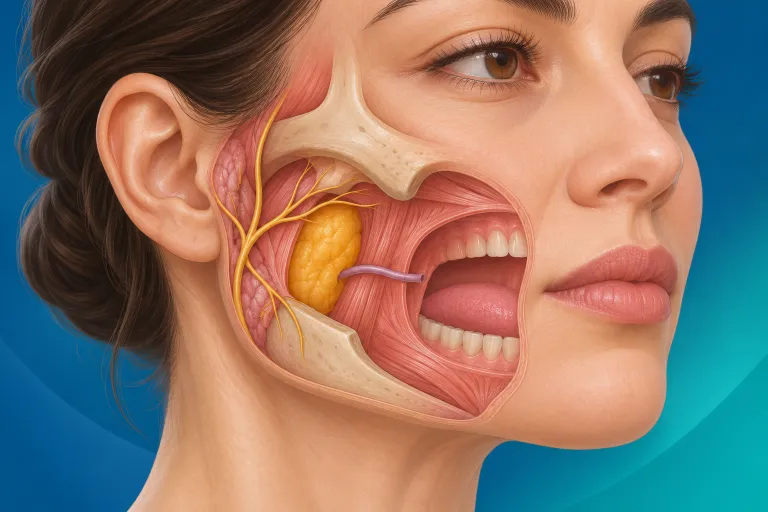
StatPearls gives the buccal fat pad another name, Bichat's fat pad, and describes its role in facial shape and movement during chewing. The same reference places it close to the facial nerve and parotid duct, a salivary duct.
The ASPS procedure page describes the goal as thinning the cheeks around the cheek hollows. Ask the surgeon to identify the area they propose changing and explain the limits of that change.
Full and partial removal: questions for the surgeon
Ask whether the proposed operation involves full or partial removal. Ask what those terms mean in your surgical plan, how the amount would be decided, and whether the plan differs between cheeks.
If a consultation includes another facial procedure, ask for each operation to be explained separately. Request the reasons for combining them and the risks of the combined plan.
Can buccal fat removal cause a hollow face as you age?
Moura's 2018 review reported that none of its included studies evaluated facial aging or long-term effects. The authors said the procedure's harmlessness for those features was unclear.
In a separate ASPS interview, surgeon Omar Hussain links facial fullness with a youthful appearance and hollowing with aging.
Ask how the surgeon considers your existing facial volume and your concerns about future hollowing. Ask what uncertainty they would include in the consent discussion, even if the early result matches your goals.
Later evidence still leaves long-term uncertainty
One 2026 systematic review by Shapiro and colleagues analyzed 10 studies with 1,123 participants. Its complication result used 921 procedures: 39 complications, or 4.2%, described as mostly minor.
The same review says long-term outcomes were poorly assessed because follow-up was limited. It reports that one included study found a gaunt appearance in 1.6%.
Ask how long patients were followed and what evidence the surgeon uses when discussing changes over later years.
Why a surgeon's assessment matters
Cleveland Clinic says a narrow face or being over a certain age may make someone unsuitable. Buccal fat naturally diminishes with age, according to its patient guide.
In the ASPS interview, Hussain says the procedure works best when buccal fat can be felt in the area of concern and skin elasticity is good. Ask how the surgeon assesses those features and what would lead them to advise against removal.
Recovery and aftercare: what Thai hospitals and clinics print
Rattinan Clinic's buccal fat removal article calls the operation outpatient and says: "No hospital stay is required." It describes local anesthesia with or without sedation, with general anesthesia used in some cases.
Rattinan's aftercare instructions say its sutures dissolve without removal. They specify antiseptic mouthwash, gentle brushing during the first week, and cold compresses plus soft or liquid food for the first three days.
The clinic also advises avoiding impact sports for three to four weeks and waiting at least one month before exercise or strenuous activity. Ask which activity restrictions apply to your operation and daily routine.
Wansiri Hospital prints "No" under "Overnight Stay" and describes absorbable sutures without stitch removal. Its procedure description uses an incision of about 1 cm inside the mouth.
Wansiri's printed aftercare includes an elevated pillow and cold compression for the first three days. It instructs patients to eat soft food and avoid spicy, hot or hard food for two weeks, with careful brushing or mouthwash or saline.

The hospital lists follow-up as "1 week/ 1 month/ 3 months". Ask which appointments require you to attend in person and how later reviews work after departure.
For general patient information, Cleveland Clinic gives a liquid diet for a day or two, then soft food as the treating clinician allows. It describes healing at around three weeks, with final results taking several months.
The ASPS interview describes a liquid diet for a couple of days followed by soft food. It also advises five days away from work while swollen.
Ask which timing applies to each activity in your own case. For more on these stages, see buccal fat removal in Thailand and buccal fat removal recovery in Thailand, then request your own written schedule from the operating team.
Planning surgery in Thailand
Ask for the assessment, procedure and aftercare arrangements in one written plan. Confirm what the quote covers, including anesthesia, any admission, medicines and follow-up.
Use buccal fat removal cost in Thailand to distinguish direct seller prices from agency figures and check inclusions. Ask separately how care for a complication would be arranged and charged.
Ask for the assessment and follow-up plan in writing
Yanhee Hospital's general cosmetic-service terms say: "Actual procedures and prices will be confirmed only after consultation with the doctor." Ask what assessment the surgeon needs before confirming a buccal fat removal plan.
Take these questions to the surgeon before booking:
- What in my facial anatomy supports or argues against removal?
- Is the proposed removal full or partial, and are other procedures included?
- Which anesthesia is planned, and is this an outpatient operation?
- What food, mouth-care and activity instructions should I follow?
- Will my stitches dissolve, or do I need a removal appointment?
- When are my follow-ups, and which require an in-person examination?
- Which warning signs require urgent assessment, and who answers outside normal hours?
- Who will handle concerns after I leave Thailand, and where would treatment take place?
Ask for the surgeon's answers about suitability as well as the booking team's answers about logistics. Request clarification of any difference between a general website schedule and your discharge plan.
Travel timing isn't the same as personal clearance
The UK National Health Service (NHS) recommends avoiding flights for seven to 10 days after facial cosmetic procedures. NHS gives this interval for facial cosmetic procedures.
The NHS also says air travel and major surgery increase blood-clot risk. Ask your treating surgeon when you can fly and which appointments should happen before departure.
Confirm what happens if you need to extend your stay. Ask how to obtain care after returning to your home country.
If you decide not to have removal
Ask whether leaving your facial anatomy unchanged fits your priorities. If you want to discuss alternatives, ask whether cheek liposuction or facial fat transfer belongs in that discussion and why.
Request a separate explanation of each option's risks and expected changes. If correction after removal is raised, ask exactly what is proposed, its limitations and the evidence for the expected result.
Bring your concern about hollowing into the assessment before deciding. Ask the surgeon to explain both the proposed change and the long-term uncertainty described in Shapiro's review.
In this section: buccal fat removal in Thailand, what buccal fat removal costs in Thailand and buccal fat removal recovery.
Frequently asked questions
What are the downsides of buccal fat removal?
ASPS lists unevenness, infection, bleeding, nerve or salivary-duct injury, persistent pain and possible revision. It also lists a suboptimal aesthetic result or minimal change, so discuss the limits of the proposed result before consent.
Why do some doctors not recommend buccal fat removal?
Cleveland Clinic cautions that a narrow face or older age may affect suitability because buccal fat diminishes with age. Ask the surgeon to explain their assessment of your facial anatomy.
Is buccal fat removal a safe surgery?
Shapiro's 2026 review describes mostly minor reported complications, alongside limited follow-up. Discuss the possible complications with your surgeon and ask how your health and proposed operation affect the consent discussion.
Can buccal fat removal make the face look hollow?
The concern is discussed in the ASPS interview with Omar Hussain, who associates hollowing with an older appearance. Ask how that concern affects the amount of fat proposed for removal.
What do we know about buccal fat removal long term?
Moura's 2018 review reported no included studies evaluating facial aging or long-term effects. Shapiro's 2026 review still described long-term assessment as poor because follow-up was limited.
Read next
- Buccal fat removal cost: Thailand beside the US, UK and AustraliaWhat Thai hospitals print for buccal fat removal, what US, UK and Australian sources give, and what each price covers.
- Buccal fat removal recovery: the timeline and the trip homeWeek by week after buccal fat removal: swelling, diet and mouth care, when the result shows, the risks, and what Thai hospitals print about stay.
Ask Whether Buccal Fat Removal Fits Your Facial Anatomy
Tell us the procedure, your budget and your dates, and any hospitals you are considering.
Get My Free Quote →Free, no obligation. Nothing goes to a clinic without your OK.