Breast Lift Scars: Incision Patterns, Healing and Care
Breast lift scars follow the incisions: around the areola, sometimes vertically down to the breast crease, and sometimes along that crease too, as the American Society of Plastic Surgeons (ASPS) describes. ASPS says these lines are permanent, although they usually fade and improve over time.
If you're considering a breast lift in Thailand, the surgical name is mastopexy. The British Association of Aesthetic Plastic Surgeons (BAAPS) describes lifting and reshaping the breasts by removing extra skin and moving the nipple and areola, the darker area around the nipple.
Where breast lift scars sit
The incision pattern is part of the surgical assessment. ASPS says the choice depends on breast size and shape, areola size and position, the degree of sagging, skin quality and elasticity, and the amount of extra skin.
Use the pattern names to ask where each incision would run. Ask the surgeon to explain why the proposed pattern fits your anatomy.
| Pattern | Where the scar sits | What the source says about selection |
|---|---|---|
| Peri-areolar or round block | A circle around the border of the areola | Yanhee Hospital describes this for "mild to moderate sagging". |
| Vertical or lollipop | Around the areola, then vertically down to the crease beneath the breast | ASPS lists this pattern and bases technique choice on the anatomical factors above. Ask which factors favor it in your case. |
| Anchor or inverted T | Around the areola, vertically down to the crease, and horizontally along the crease | Yanhee describes this for "more severe sagging", with a longer scar across those locations. |
What "lollipop" and "anchor" mean
Cleveland Clinic's breast-lift guide uses lollipop for the circular and vertical incision pattern. Its anchor pattern adds the horizontal line along the breast crease.
Ask for a drawing with every planned incision labeled, including any line along the fold. If you prefer a particular pattern, ask the surgeon to explain whether it fits the operation they propose.
Combined lift and implants are a separate decision
BAAPS describes combining an uplift with implants. For that discussion, see breast lift with implants in Thailand.
Artz and colleagues' 2019 retrospective series, meaning a review of past patient records, involved 56 consecutive patients having augmentation and mastopexy, with an average follow-up of 2.1 years. It reported hypertrophic scarring among the complications; the patient country is unspecified in the abstract.
Keep questions about implant risks and any later surgery in the combined-procedure discussion. Ask the surgeon to mark the incisions for the full proposed operation.
How breast lift scars change over time
Scars can change in color, surface wrinkling or length over different timeframes.
| Time or stage | What the source says | Procedure context |
|---|---|---|
| Early healing | Scars often start pink or red and may initially be raised, firm or darker. | Daniel Maman's ASPS article, published in 2026, discusses augmentation scars. |
| Several months to more than a year | The healing process can take this long. With proper postoperative care, scars usually soften, flatten and lighten over time. | The same ASPS augmentation article; ask your surgeon how its advice applies to your lift. |
| One to two years | Scarring and skin wrinkling around the areola "can take one to two years to smooth out". | Yanhee's peri-areolar lift description. |
| One year | Average scar length increased by 22%. | Keck and colleagues' 2007 vertical-mammaplasty study, a retrospective series, meaning a review of past patient records, of 72 consecutive patients, with 42 attending regular follow-up. |
Keck's study concerns vertical mammaplasty, or breast reshaping surgery. The patient country is unspecified in its abstract.
Why individual scars vary
ASPS's augmentation scar guide says healing rate can depend on age, genetics, skin tone and sun exposure. This is augmentation guidance, so ask your lift surgeon how your history affects the assessment.
Your healing rate may vary, as ASPS explains. Bring questions about previous raised or widened scars to the consultation, and ask what changes the surgeon would expect to review over time.
How to reduce the appearance of breast lift scars
Follow the operating surgeon's scar-care instructions.
ASPS's augmentation scar-care article puts the surgical team's instructions first, including wound care and treatment choices. Ask which measures apply to your lift and when each can begin.
Care measures to ask about
The ASPS article advises avoiding heavy lifting and vigorous exercise, moisturizing as directed, and covering scars or using broad-spectrum SPF 30+ sunscreen. It also describes massage as instructed and creams or silicone sheets within the postoperative care plan.
Get practical instructions for home use:
- Which products should I use, and when can I start each one?
- Should I massage the scar, and can you demonstrate the method?
- Which movements or activities should I avoid, and when will you review those restrictions?
- How should I protect the incision area from sun exposure while it heals?
Cleveland Clinic's breast-reduction scar guidance says to wait for the surgeon's approval before starting massage. Treat that as a question for your own team, rather than choosing a start date from another patient's routine.
Silicone sheets
Silicone sheets are among the options in the ASPS scar-care article. Ask whether the surgeon recommends them for your incision, how to apply them and how long to continue.
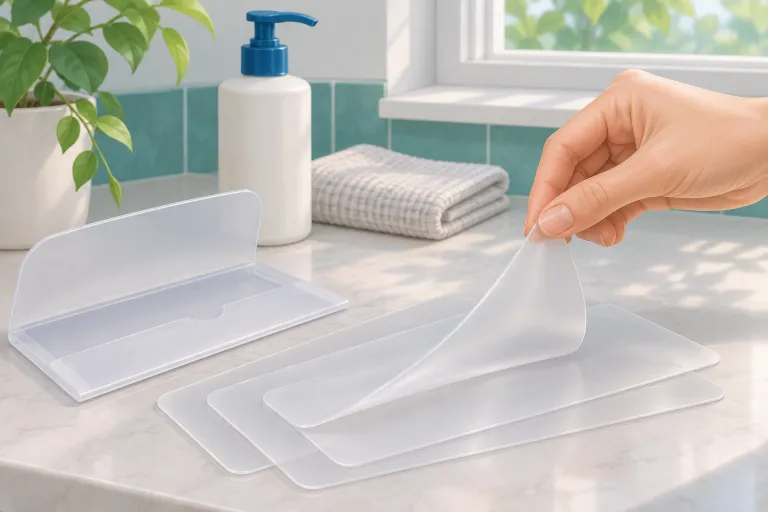
O'Brien and colleagues' 2013 Cochrane review included 20 trials involving 873 people, aged 1.5 to 81 years, across scar prevention and treatment research. Participant countries are unspecified in the abstract.
The review reported less hypertrophic scarring, meaning raised scars that stay within the incision site, with silicone sheets than with no treatment among people prone to scarring. It also judged those prevention studies highly susceptible to bias, meaning their methods could distort the findings.
Treatments a clinician may discuss for a poorly healing scar
ASPS says silicone sheets, steroid injections or laser therapy may help when scars aren't healing well. That statement comes from its augmentation article.
Ask the clinician to identify the scar problem before discussing treatment. Request an explanation of the expected benefit, possible downsides and follow-up needed for the option they suggest.
Scar problems after a breast lift
The ASPS breast-lift brochure lists unfavorable scarring and poor wound healing among the risks. It also lists infection and pain that may persist.
Ask your surgical team which changes need a prompt assessment and how to reach them. Have them assess a scar you're concerned about, rather than diagnosing it from a description or photograph.
Hypertrophic and keloid scars
Cleveland Clinic's breast-reduction scar page describes hypertrophic scars as raised scars that stay within the incision site. It describes keloids as raised scars that grow beyond the incision and develop slowly over months to years.
Those descriptions explain the terms in a reduction-surgery context. Ask your surgeon what they mean for your lift and whether any previous scars warrant a different follow-up plan.
Scar complications reported in mastopexy research
Di Summa and colleagues' 2019 systematic review, a study that brings together results from earlier studies, covered 34 studies published from 1980 through 2016, representing 1,888 patients having mastopexy without implants. Patient countries are unspecified in the abstract.
Scar-related complications were reported in 3%, including hypertrophic scars or an unattractive scar appearance. Ask your surgeon about the risks of the specific technique proposed for you. Review abstract.
Scar follow-up at Yanhee Hospital
Yanhee Hospital's lift page describes its peri-areolar and anchor techniques, along with a postoperative check. Use those descriptions to ask for your proposed scar pattern and appointment schedule in writing.
Scar patterns Yanhee Hospital describes
Yanhee describes the peri-areolar incision around the areola border and the anchor incision extending down to and along the fold. Its package introduction says "one-night stay", while its stay FAQ says patients are typically admitted for one to two nights, read 4 November 2026.
Ask which admission plan applies to you. Keep the hospital nights and the date of your later check as separate entries in your travel plan.
Arrange the hospital check before traveling home
Yanhee advises planning a check-up seven to 10 days after surgery before flying. Ask your operating team to confirm your appointment and departure plan individually.
For the wider recovery discussion, see breast lift recovery in Thailand. Request written answers to these follow-up questions:
- Will any stitches need removal, and who will do it?
- What needs to be checked before I travel home?
- When should the scar next be reviewed after that appointment?
- Who should I contact about a wound or scar concern after returning home?
- If I need an examination at home, how will that clinician receive the operation and aftercare details?
Keep a copy of the care instructions and contact details. Ask the operating team to explain what to do if an appointment or flight needs to change.
Keep the money question separate from the scar question
See breast lift cost in Thailand for published prices. Ask the surgeon to explain the proposed incisions before comparing quotes for that operation.
Clinics cannot pay to be listed or ranked higher on AsiaPatient.
In this section: breast lift in Thailand, what a breast lift costs in Thailand, breast lift recovery and breast lift with implants.
Frequently asked questions
Do breast lift scars go away?
No. ASPS says incision lines are permanent, although they usually fade and improve over time. Ask your surgeon about the likely visibility of each planned line.
What do breast lift scars look like after a year?
ASPS's augmentation article gives several months to more than a year for healing. Yanhee gives one to two years for peri-areolar scarring and wrinkling to smooth.
Ask your surgeon to discuss color and texture as well as length when reviewing your scar.
How can I reduce breast lift scars?
Follow the operating team's plan. ASPS's augmentation guidance includes sun protection, moisturizing and directed scar care, with massage, creams or silicone sheets as instructed. Ask when each measure is appropriate for your incision.
What is the difference between lollipop and anchor lift scars?
Cleveland Clinic describes the lollipop pattern as a circle around the areola with a vertical line to the breast crease. The anchor pattern adds a horizontal incision along that crease. Ask why the surgeon proposes that pattern for you.
Can breasts still sag after a breast lift?
Discuss the likelihood of later changes with your surgeon in the context of your proposed operation.
Read next
- Breast lift with implants: one stage or two, recovery and risksWhat a breast lift with implants involves, one-stage versus staged surgery, the scars, recovery, the risks studies report, and what Thai hospitals print.
- Breast lift cost: Thailand beside the US, UK and AustraliaWhat Thai hospitals print for breast lift, what US, UK and Australian sources give, and what each price covers.
- Breast lift recovery: the timeline and the trip homeWeek by week after breast lift: drains and garments, swelling, scars, the risks, and what Thai hospitals print about stay.
Ask a Thai Surgeon Which Scar Pattern They Plan, in Writing
Tell us the procedure, your budget and your dates, and any hospitals you are considering.
Get My Free Quote →Free, no obligation. Nothing goes to a clinic without your OK.